
Vectaria IO Online
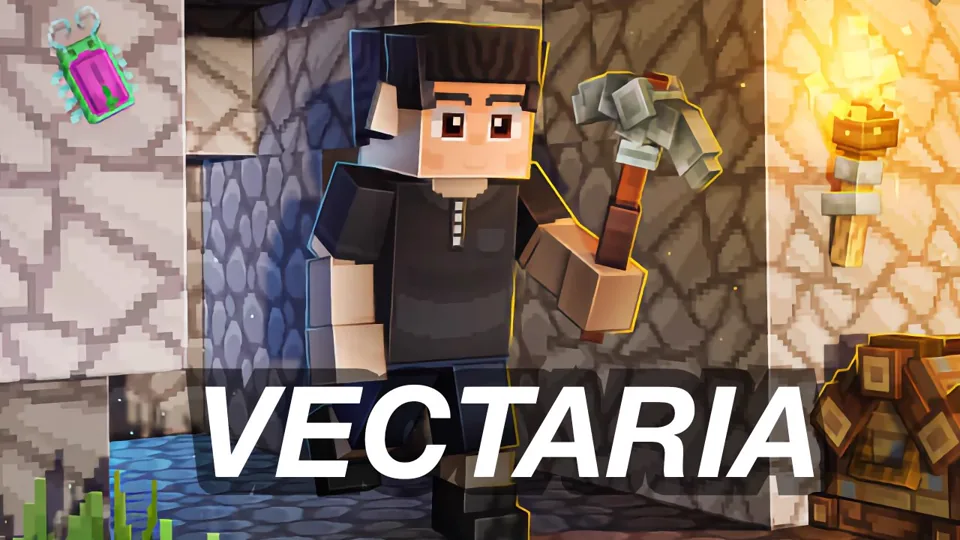
Vectaria IO is a multiplayer voxel sandbox where you choose a character, mine resources, craft, claim land, build landmarks, survive, chat, and switch between Creative or PvP-focused goals.
Shared Voxel Sandbox
Vectaria IO is a multiplayer voxel sandbox by Vectaria built around Minecraft-like building and digging with a stronger mode split than a simple creative clone. Its core is shared block worlds, resource gathering, crafting, Creative building, Survival, and PvP. The important difference is social presence: blocks are placed in spaces where other people can see, use, attack, protect, or navigate around them.
The first useful decision is character and mode. Vectaria IO lets players begin as one of four characters: Martha, Oliver, Mike, or Rose. The character choice is simple, but it gives the session a more game-like opening than dropping straight into a blank world. After that, the real fork is mode choice. Creative removes resource pressure so building can start immediately. Casual Survival keeps mining, crafting, and danger in the loop while allowing PvP to be turned on or off. PvP Survival pushes the sandbox toward combat, where other players are the biggest problem to solve.
That structure is why Vectaria IO should not be described as only "a Minecraft clone." It uses familiar voxel actions, but the multiplayer design is built around character choice, shared worlds, chat, public presence, and mode switching. The same block can be a design material in Creative, a resource in Survival, or cover in PvP.
The important difference is intent. In Creative, a block is an expression tool. In Survival, a block is stored labor because somebody had to mine, carry, and place it. In PvP, a block is a timing decision: a wall can break a line of sight, a tunnel can become an escape route, and a poorly placed doorway can become a trap. Vectaria IO becomes easier to understand once you stop treating the modes as cosmetic variants and start treating them as different rule pressures built from the same controls.
Modes, Controls, and Shared Space
Vectaria IO uses familiar voxel-game actions, but the control set is deeper than simple movement and clicking. Move with WASD or the arrow keys. Use left click to mine blocks or attack. Use right click to place blocks. Jump with Space. Open inventory with X or U. Open the home menu with G, view spawn points with M, open the shop with O, open the guide with I, and press Enter to chat. Those keys matter because Vectaria is not only a movement-and-click game. The menus control inventory, navigation, spawn knowledge, learning, and social play.
The loop changes depending on the mode you select. In Creative, the main loop is plan, place, inspect, and expand. You can learn camera movement, block placement, and large-scale structure without worrying about resource scarcity. In Survival, the loop becomes gather, craft, build shelter, explore, and decide whether to risk more dangerous areas. In Survival with PvP enabled, every public encounter adds uncertainty. In PvP Survival, the same terrain becomes tactical: hills, walls, doorways, and tunnels can protect you or trap you.
Good early habits are mode-specific:
The PvP toggle is an important detail. Casual Survival can let players turn PvP on or off from inventory, so a survival session does not have to become a duel. Survival can stay resource-focused until the server or group makes combat interesting.
Land protection is another important survival detail. A Ruler-style claim tool can mark two corners of a rectangular area and protect that space, preventing other players from casually breaking blocks or opening chests inside the claimed zone. Whether you are building a public base, storing materials, or making a shared landmark, that claim mechanic changes the social risk of construction. A protected home is less likely to become griefed rubble while you are elsewhere.
Because the world is multiplayer, every build has social meaning. A tower is not only a tower; it is something other players can see from a distance. A base is not only storage; it is a route anchor. A bridge is not only decoration; it changes movement. Vectaria IO becomes richer when you think about how your blocks will be read by other players.
Key Highlights
- In Creative, build one readable structure before starting a giant city.
- In Survival, gather enough materials before leaving a safe area.
- In PvP, treat blocks as cover and avoid running through open ground without a plan.
- In shared worlds, make buildings visible and navigable so friends can actually use them.
- Use chat when coordinating, but do not type in exposed PvP space.
- Check spawn points before roaming too far from a base or resource route.
Building for Other Players
Vectaria IO is strongest when you build with an audience in mind. That does not mean everything has to be decorative. It means a structure should communicate its purpose. A tall marker says "return here." A bridge says "this path is safe enough to cross." A protected claim says "this is owned space." A shared storage room says "resources belong in this system, not scattered across random chests."
Creative mode lets that building language develop without survival pressure. Start with a small house, then add a roofline, windows, paths, and a landmark tower. The goal is not merely placing many blocks; the goal is learning how shape reads in a voxel world. Large flat walls are fast, but they can make a build look unfinished. Repeating supports, stair details, balconies, and roof variation create direction. The same visual habits help later in Survival, where a readable base is easier to defend and easier to navigate.
Survival turns the same design choices into resource decisions. A huge wall may look safe, but it costs time and materials. A smaller protected core with good exits may be stronger early. Mining trips should feed a specific plan: tools, storage, base walls, crafting, or travel routes. If you gather without a plan, inventory fills with materials that do not solve the next problem. If you build without a plan, you create a base that looks busy but lacks protection, access, or storage logic.
PvP makes terrain part of the weapon set. High ground can reveal movement. Tunnels hide travel but can trap you if there is only one exit. Narrow doors are easy to defend but dangerous when retreating. Open plains are fast but expose you to attacks from several angles. Before a fight, look at the blocks around you as options: where can you break line of sight, where can you jump safely, where could another player cut you off, and where is the nearest protected or familiar route?
Multiplayer Block-World Identity
Vectaria IO's identity comes from character choice, mode choice, controls, inventory, chat, spawn points, claims, and PvP expectations all existing in the same block world. It does not need to reproduce every Minecraft feature to create a useful loop; it needs mining, placement, travel, chat, claims, and combat pressure to support one another clearly.
That structure makes the world feel different from a private construction toy. A Creative structure becomes a landmark, a Survival base becomes a resource system, a PvP wall becomes a combat decision, and a bridge changes how a group moves.
First Session Priorities
Begin from a safe spot and learn the first verbs before roaming far: move, mine, place, open inventory, read spawn points, and use chat only when danger is low. Vectaria IO mixes building, survival, menus, and other players, so the first minute should establish orientation rather than turn into a risky expedition.
Start in Creative when the controls are unfamiliar. Practice left-click mining, right-click placement, jumping, opening inventory, and using the guide menu. Once those actions feel natural, switch to Survival to see how resource gathering and crafting change the pace. PvP Survival makes more sense after movement is automatic, because a fight is a bad place to learn which key opens inventory.
If you enter a shared world, establish a small base or landmark early. It does not need to be impressive. A simple visible structure gives you orientation, helps friends find you, and makes spawn or return routes easier to understand. In PvP, build cover before you need it. In Creative, keep the first project small enough to finish, then expand outward with paths, towers, or connected rooms.
Use menus deliberately. Inventory is not only storage; it is where important session settings can live. Spawn points matter when you travel. The shop and guide can explain progression or options that are not obvious from the first minute. Chat is useful for friends, but it also takes attention away from movement, so use it from a safe place.
Finally, each mode has to be read by its own rules. Creative is about flexible shape-making. Survival is about gathering, crafting, and protecting usable space. PvP is about cover, timing, and pressure from other players. Vectaria IO is broad because all three live under the same control scheme, but the selected mode decides which decisions matter most.