


PokeChill Online Pokemon RPG
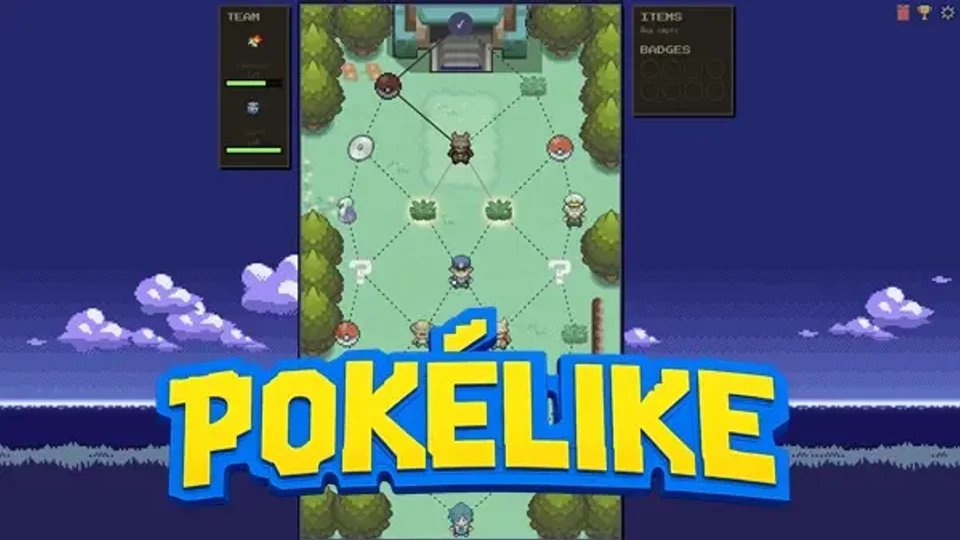
PokeChill is a relaxed Pokemon browser RPG built around starter choice, travel, team management, training, genetics, and long-term collection systems rather than one short battle loop.
Calm Pokemon Growth With Deep Management
PokeChill is a relaxed Pokemon browser RPG built around starter choice, travel, automated battles, collection, training, genetics, items, and long-term roster care. The name is accurate in tone, but the systems underneath are not empty. PokeChill is calm because the pace is steady; it is deep because the save keeps accumulating decisions.
The opening starts with a visible starter choice between Litten, Turtwig, and Froakie. That choice gives the first team identity, but the game quickly points toward Travel as the main expansion tool. Travel is how the roster grows, how new encounters appear, and how the collection starts turning from one starter into a managed box of options.
Battles resolve with less manual pressure than a traditional Pokemon RPG. That makes preparation more important than button timing. Team order, move access, item use, ability value, type coverage, training direction, and collection management do most of the work. A weak roster does not become strong just because the battle is calmer. It becomes strong because the save has been managed well over time.
The interface exposes a large set of management surfaces: Pokemon lists, move teaching, inventory categories, battle-related stats, wild areas, dungeons, events, Wonder Trade, Poke-Mart, Mega-Dimension, dictionary and guide entries, theme controls, and save import or export. Those systems make PokeChill feel less like a one-run game and more like a persistent collection project.
Travel, Teams, and Collection Shape
Travel is the first major loop. A new area means new encounters, new roster possibilities, and new reasons to revisit team structure. Early progress should focus on building a team that can handle common pressure instead of collecting at random. A Pokemon may be useful because it covers a type weakness, carries a move the team lacks, supports a future breeding plan, or gives the roster a safer fallback when the starter cannot answer a matchup.
Multiple teams matter as the collection expands. One lineup can handle routine travel. Another can focus on training. Another can test inherited moves or stat experiments. Without organization, a growing roster becomes noise. Filters, tags, inventory categories, and type or ability checks help turn a large collection into something readable.
Moves are part of that organization. PokeChill's interface can show move teaching options and battle details, which makes move choice a real planning surface. A Pokemon with the right typing but poor move access may underperform. A Pokemon with a strong inherited or taught move can become valuable even if its raw stats are not the highest in the box.
Items create another layer. Potions, TMs, shop purchases, held items, and inventory categories give the collection practical support. The best item use is not random spending. It is targeted correction: patch a move gap, support a team that is about to travel farther, prepare a training plan, or keep a valuable Pokemon useful while its long-term stats develop.
Training, Genetics, and Inheritance
Training turns a casual collection into a long-term plan. Instead of only asking which Pokemon was caught most recently, PokeChill asks which Pokemon deserves investment. Training can make a useful roster piece more reliable, but it should follow a role. A fast attacker, durable pivot, support option, or special project all need different priorities.
Genetics gives PokeChill its deeper management identity. Compatibility rules, power costs, IV inheritance, shiny mutation chances, move inheritance, and special restrictions all make breeding decisions matter. A pairing is not only about creating another Pokemon. It is about whether the child can inherit the right strengths, whether the mutation path is possible, and whether the result advances the roster instead of filling storage with duplicates.
IV inheritance is especially important because it turns future value into a planning problem. A Pokemon with the right visible role may also matter because it can pass useful stats forward. A weaker current fighter can still be a strong genetics piece. A rare or special Pokemon may have restrictions that change whether shiny mutation or inheritance plans can apply.
Move inheritance expands that idea. A child with better access to a key move can become more useful than either parent in a specific team shape. This is where PokeChill moves away from simple idle collection. The save becomes a laboratory: test compatibility, compare stats, check abilities, keep useful parents, and build toward stronger long-term combinations.
Wild Areas, Dungeons, Trade, and Mega-Dimension
The wider menu gives the game more than one daily rhythm. Wild Areas support collection and travel variety. Dungeons create a more directed form of progress. Events add temporary reasons to adjust goals. Wonder Trade introduces uncertainty by turning surplus or unwanted Pokemon into a chance at something unexpected. Poke-Mart gives the economy a practical outlet through items and supplies.
Mega-Dimension adds a rotating pressure point. A timer and rotation structure make it feel different from ordinary travel because the available opportunity is not always static. That makes planning more dynamic: finish a training step, prepare the right team, then spend the window while it is active.
The dictionary and guide entries are important because PokeChill has enough systems to reward reference. Genetics, training, compatibility, items, move teaching, types, abilities, and battle stats all become easier to manage when the save is treated as a long project instead of a single fight.
Save import and export also fit the game's identity. A long-running roster needs continuity. Exporting a save makes the collection feel more permanent, and importing gives the management loop room to continue across sessions. For a game built around steady improvement, that continuity is not a side feature; it is part of the structure.
Building A Better Long-Term Save
Start with a simple goal: make the first team stable. Cover obvious type gaps, teach useful moves when available, and avoid spending every resource on a Pokemon that has no long-term role. A stable first team makes travel smoother, and smoother travel creates more chances to find better roster pieces.
Then separate collection from development. Not every Pokemon needs training immediately. Some are battle pieces, some are genetics pieces, some are trade material, and some are collection records. Labeling those roles mentally keeps the save from becoming clutter.
When genetics opens up, plan pairings around outcome rather than novelty. Check compatibility, inheritance, mutation possibility, and the move or IV goal before committing. A good genetics result should either strengthen a team, create a better parent for a future plan, or unlock a collection target that could not be reached through ordinary travel.
PokeChill is strongest when its calm surface is paired with careful management. Travel expands the roster, automated battles test preparation, training sharpens chosen Pokemon, genetics creates long-term projects, and side systems keep the save moving. The result is a quiet Pokemon-style RPG where progress feels steady because every small improvement has somewhere to go.