


PokePlunder Online Pokemon Roguelike
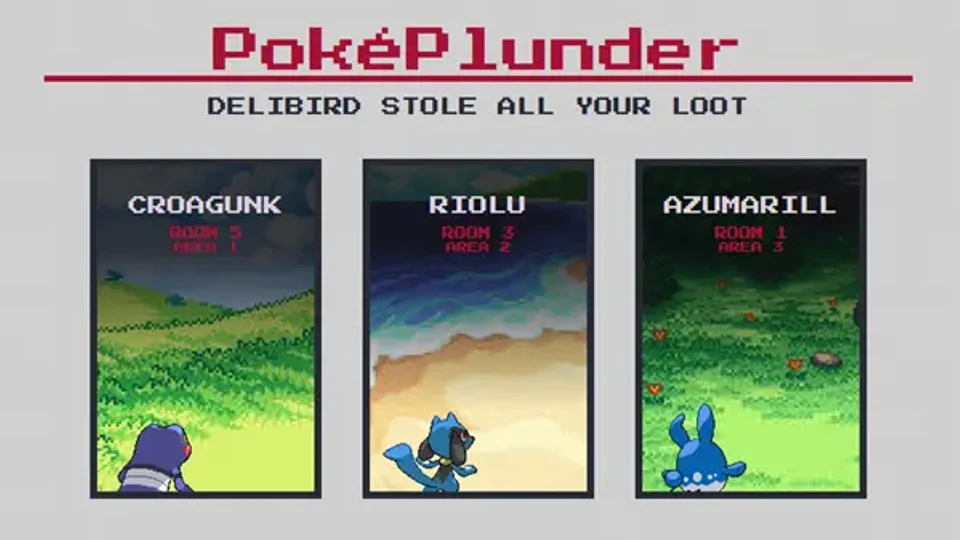
PokePlunder is a turn-based Pokemon roguelike where procedural dungeon rooms, playable Pokemon, wild encounters, loot, shops, moves, items, and permanent upgrades shape each run.
Pokemon Roguelike Treasure Runs
PokePlunder is a turn-based Pokemon roguelike by Khydra built around procedural rooms, playable Pokemon, wild encounters, items, moves, shops, treasure, permanent upgrades, and repeat attempts. The game takes the familiar structure of Pokemon battles and moves it into a dungeon-run format. Instead of following a fixed gym campaign, each attempt becomes an expedition through rooms where the next reward, fight, or shop can reshape the build.
The public feature set gives the game real variety: 9 playable Pokemon, 9 different areas to explore, 140+ items, 100+ moves with different effects and synergies, and 150+ wild Pokemon encounters. Those numbers matter because roguelikes live or die by combination space. A run should not feel identical every time. PokePlunder uses item choice, move choice, encounter luck, and permanent progress to keep the next expedition from becoming a copy of the last one.
Turn-based combat gives the chaos a readable pace. A bad decision can still hurt, but the player has time to think. Which move preserves health? Which item supports the current build? Is this wild encounter worth the risk? Should resources be saved for a shop? Should the run lean into one synergy or stay flexible because the next rooms are unknown?
The treasure theme also changes how progress feels. Chests, shops, and room rewards are not decoration. They are the material that turns one playable Pokemon into a build. A run becomes memorable when a move, item, or shop purchase changes how fights are approached.
Rooms, Encounters, and Shop Decisions
Procedural rooms keep the route uncertain. A fixed dungeon can be memorized. A roguelike dungeon asks for adaptation. PokePlunder's rooms can contain wild battles, loot, shops, and route choices that make the next decision matter. The goal is not only to clear the next fight. The goal is to leave the room in a stronger position than when it began.
Wild encounters are pressure and opportunity at the same time. A fight can cost health or resources, but it can also give rewards, experience, or progress toward a stronger route. If the current build is fragile, unnecessary fights become dangerous. If the build has momentum, fights can become a way to snowball.
Shops create a different kind of tension. Spending immediately can solve a current problem, but saving resources may allow a stronger purchase later. The best shop decision depends on the build's weakness. Low survivability needs healing, defense, or safer tools. Weak damage needs moves or items that shorten fights. A build with one strong synergy may need support that keeps that synergy working.
Chests and item rewards define the run's personality. A raw stat item makes the current Pokemon more reliable. A strange utility item may open a new plan. A move-changing reward can turn a slow build into an aggressive one or give a defensive run a way to finish enemies cleanly. The strongest players do not only ask whether a reward is powerful. They ask whether it fits the run that already exists.
Moves, Items, and Synergy
The large move and item pools are where PokePlunder gets its depth. A hundred moves with different effects and synergies means battles are not only about choosing the highest damage option. A move may matter because it applies status, protects health, works with an item, covers a type weakness, or makes future fights safer.
Items create build identity. Some items improve direct combat. Others support survival, resource management, or specific move effects. The best item is often the one that turns repeated small advantages into a run-winning pattern. A healing or defensive item may look boring, but if it keeps the run alive through three more rooms, it has done more than a flashy reward that only wins one fight.
Playable Pokemon also change how rewards should be judged. A fast attacker wants different tools than a durable fighter. A Pokemon with strong type coverage may benefit from items that keep it alive. A Pokemon with awkward early moves may need shop help or reward luck before the build comes together.
Synergy should not become tunnel vision. A run that finds one strong combo should use it, but the dungeon can still ask for flexibility. If the next area punishes the current plan, a backup move, healing option, or alternate item can prevent the run from collapsing.
Permanent Upgrades And Better Attempts
PokePlunder uses earned points and permanent upgrades between attempts, which gives failed runs value. A loss is not only an ending. It can become the reason the next run starts stronger, reaches a new area, or handles early fights with less strain.
Permanent upgrades also change how risk should be judged. Early attempts may need safer play because the base power is low. Later attempts can afford more aggressive routes if upgrades support survivability or damage. The run still needs smart decisions, but the long-term layer means progress does not vanish completely when a dungeon ends.
The nine areas give that progression a broader target. Clearing one area is not the whole game. Each new area can bring different encounter pressure, reward needs, and build demands. A move that carried one area may not solve the next. A Pokemon that felt safe early may need different items later.
Clean Expedition Plan
Start each run by identifying what the chosen Pokemon already does well. If it has reliable damage, look for survivability and utility. If it survives well but fights slowly, prioritize damage or move upgrades. If its typing leaves a clear weakness, keep resources available for coverage.
During rooms, avoid treating every reward as equal. Take rewards that support the build's current direction or fix the next visible problem. If a shop appears, buy for the next few rooms rather than for a fantasy late-game plan that may never happen. If health is low, survival matters. If fights are clean, invest in scaling.
After a failed run, diagnose the first real collapse. Did a wild encounter drain too many resources? Did the build lack type coverage? Did a shop purchase fail to solve the right problem? Did greed for one more room cost the run? That diagnosis should guide the next permanent upgrade and the next expedition plan.
PokePlunder works because it turns Pokemon-style battles into roguelike decision chains. Playable Pokemon, procedural rooms, wild encounters, shops, 140+ items, 100+ moves, 150+ encounter possibilities, permanent upgrades, and nine areas create a loop where every run can teach a cleaner way to push deeper.