


The Final Earth 2 Online
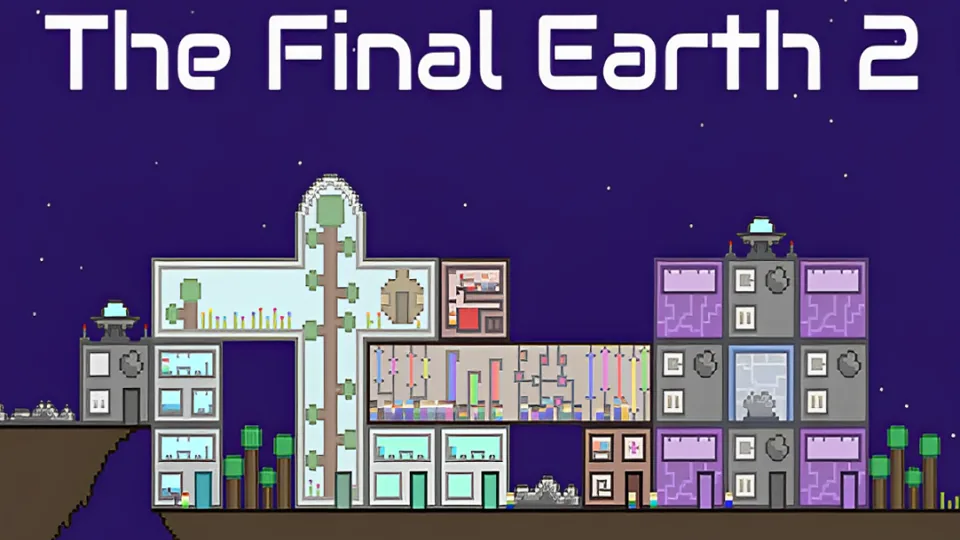
The Final Earth 2 is a futuristic vertical city builder where one exploration ship becomes a layered space colony of homes, farms, labs, workers, transport, and research.
One Ship Into a Vertical Metropolis
The Final Earth 2 is a futuristic colony management game built around a compact but powerful premise: Earth is no longer livable, food is running out, and one exploration ship has to become humanity's next city. The opening is intentionally small. You begin with limited space, basic resources, a few early buildings, and a colony that only survives if housing, work, food, research, and happiness start reinforcing each other.
The story begins in 2142, after devastating climate change has left Earth unlivable. The ship reaches a tiny world just before its supplies fail, which makes the first landing site feel both hopeful and cramped. There is enough room to begin again, but not enough room to be careless. That is why The Final Earth 2 does not play like a flat city sprawl. It is a vertical city builder. You stack a colony upward, turning a small landing site into layered housing, farms, workshops, schools, entertainment, research buildings, transport systems, and eventually advanced science-fiction infrastructure.
The scale grows far beyond the opening ship. Thousands of simulated inhabitants, a large building list, story scenarios, Free Play, Creative mode, rockets, teleporters, multi-world expansion, and late discoveries all grow from the same tiny question: can this little stack of rooms become a civilization?
The key idea is dependency. A house matters only if citizens can move in. A workplace matters only if workers can staff it. More citizens help the economy but also demand homes, food, services, and entertainment. Research opens stronger systems, but research buildings still need people and resources. The city grows upward, but the logic grows inward: every new floor has to connect to the population beneath it.
Housing, Work, Research, Happiness
The first colony should be read as a chain. Resources allow construction. Construction creates homes and jobs. Homes invite citizens. Citizens staff production. Production supports research. Research unlocks better buildings. Better buildings create new needs. If one link breaks, expansion stalls. The Final Earth 2 is forgiving enough that most mistakes can be corrected, but the best runs feel calm because each new building solves the current constraint rather than creating three more.
Housing is the visible bottleneck. Without enough living space, population growth slows. But adding housing alone does not solve the city. Citizens need useful work, and empty workplaces waste construction effort. A dense colony may look impressive while still hiding a labor shortage. Worker assignment tools matter because they show whether the city has enough people in the right places. A farm with no workers is only decoration. A research building with no staffing cannot push the colony forward.
Production graphs and resource feedback help turn guesswork into management. If food is flat while population rises, the colony is borrowing time. If construction resources run low, repeating homes may not be enough. If research slows, the next unlock may require more education, better staffing, or a different building mix. The game is not about clicking as fast as possible. It is about reading where the city is quietly stuck.
Happiness and services become more important as the population grows. A tiny survival stack can survive on essentials, but a real city needs entertainment, education, festivals, and quality-of-life support. Festivals are especially useful because they turn morale into a city-wide planning resource instead of a decorative extra. Citizens are not just labor counters. They move, work, relax, commute, and respond to the city around them. Watching a big colony operate can feel like watching an ant colony with elevators, landing pads, research labs, parks, and strange future buildings.
The useful mental model is not "more buildings is better." It is "every citizen needs a reason to exist." A new resident should have a home, a job, access to services, and a place in the larger production chain. A new workplace should be supported by workers, resources, and transport. A new research push should answer a real constraint. When the colony feels stable, it is usually because these relationships are aligned. When it feels stuck, one of them is broken.
Building Shape as Strategy
The vertical structure changes how planning feels. In a flat city builder, inefficient sprawl can hide problems for a long time. In The Final Earth 2, tight space forces priorities early. Should the next level hold housing, food, industry, or research? Should a support building sit near the workers who need it? Should the colony become one huge stacked tower, a set of connected districts, a garden-heavy settlement, a dense factory city, or a network spread across multiple worlds?
Transport is the long-term answer to density. Early paths and local movement eventually give way to landing pads, rockets, spaceships, teleporters, and links between associated cities. That means the first landing site is not the whole story. It is the root. A strong root produces people, knowledge, and resources that can support expansion beyond the original world. A weak root becomes a tall pile of shortages.
Scenario play gives the systems a guided story arc. It is useful for learning because goals and constraints push the player toward specific lessons: feed people, house them, unlock technology, manage happiness, and expand beyond the first platform. Free Play and Creative mode turn the same systems into a planning toy. Without a strict goal, the challenge becomes aesthetic and systemic: create a green colony full of gardens, an industrial megastructure, a festival city, or a carefully optimized production machine.
The building categories deepen that choice. Houses define population capacity. Production buildings drive resources. Services and entertainment protect citizen quality. Education and research unlock the future. Transportation shapes movement. Unique buildings, nature, and decoration give the city identity. Secret societies, hackers, hippies, alien ruins, unusual achievements, and other late-game discoveries add flavor for players who keep expanding beyond the early survival puzzle.
The vertical format also makes beauty and efficiency collide. A neat tower can be satisfying, but a city that is too narrow may push critical services too far from the citizens who need them. A spread-out colony can breathe, but it may waste movement time or make resource transfers awkward. The best layouts usually develop districts: food and basic labor near early housing, research and education near higher-value workers, entertainment where happiness pressure appears, and transport where travel time begins to damage productivity.
Reading the Colony Before Expanding
The best first rule is to build for the next constraint, not for the prettiest skyline. If citizens are missing, add housing or make the city more attractive. If jobs sit empty, stop adding workplaces until the labor pool recovers. If resources slow down, inspect the production chain before placing more advanced structures. If happiness drops, do not ignore services just because the resource numbers look stable.
The second rule is to avoid copying early buildings forever. Basic structures are useful, but research exists to change the shape of the colony. A player who only repeats the first farm or first workplace eventually creates a dense but inefficient stack. A better player unlocks stronger systems, replaces weak bottlenecks, and lets the colony evolve from emergency survival into a real metropolis.
The third rule is to watch movement. Citizens traveling between homes, workplaces, services, and transport points give the city life, but movement also reveals friction. A long commute, isolated district, or badly placed support building can make a beautiful stack feel sluggish. Following a citizen can be more than a visual pleasure; it can show whether the colony's shape actually works.
The fourth rule is to use new technology to change habits, not just decorate the skyline. Research is most powerful when it replaces a clumsy early solution. Better transport can unlock wider districts. Advanced production can reduce pressure on old resource chains. Rockets and world-to-world movement can turn one constrained colony into a network. Good technology should simplify a real bottleneck.
The Final Earth 2 is a city builder and colony sim about incremental growth, compact layouts, pixel-art science fiction, and management decisions where small resource choices grow into large systems. It is not a combat game and not a reflex challenge. Its satisfaction comes from turning one desperate ship into a layered civilization where thousands of inhabitants can live, work, celebrate, research, and eventually travel farther than the original rock.
Start slowly, read the chain, and let each expansion answer a real need. Once that mindset clicks, The Final Earth 2 stops being a tiny vertical puzzle and becomes a long-form colony story: survival first, stability second, research third, then the strange pleasure of watching humanity rebuild itself floor by floor.