







Robber Run Online
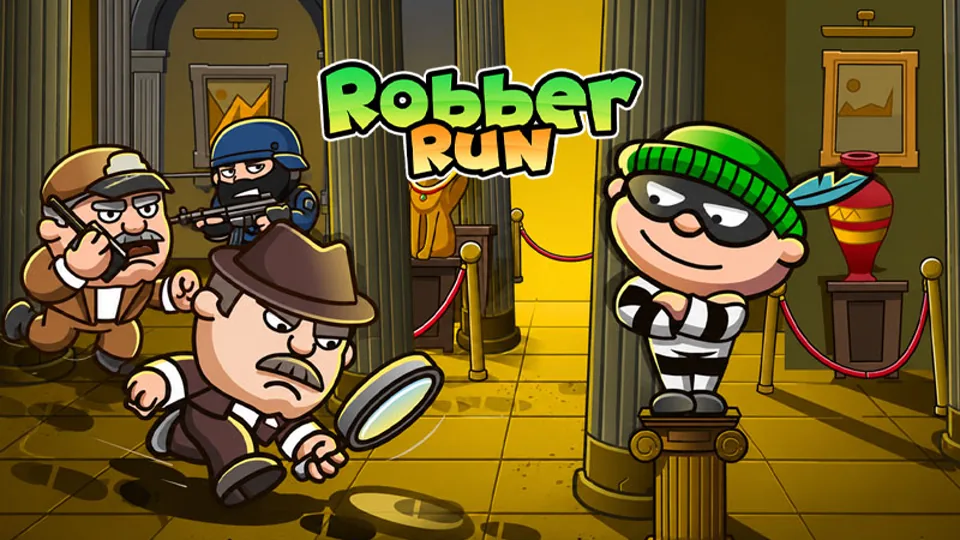
Robber Run is a stealth puzzle adventure about reading guard routes, avoiding cameras, using doors and elevators, collecting loot, and escaping cleanly.
Compact Heist Route Puzzle
Robber Run is a stealth puzzle adventure about planning a clean route through guarded spaces. Despite the word "Run" in the title, the gameplay is not a pure runner where reflex speed solves everything. The level language is built from guards, security cameras, locked paths, doors, elevators, cash rewards, hidden routes, and escape planning. Your goal is to enter secure areas, collect valuables, and leave without turning the whole level into a failed alarm state.
The control guide is intentionally narrow: A or Left Arrow moves left, D or Right Arrow moves right, and W or Up Arrow interacts with doors, objects, and elevators. That limited input set keeps attention on stealth timing, patrol routes, traps, obstacles, treasures, hiding spots, and the safe path to freedom.
That gives Robber Run a clear identity. It is not about building a character, leveling up gear, or improvising combat. It is about reading a small environment and choosing when to move. A level can contain a direct route that looks tempting, a protected reward that may be worth the risk, and an exit that becomes harder to reach if you move without thinking. The stealth is simple enough for quick play, but the puzzle layer comes from deciding which risks are necessary.
The heist structure is also more concrete than the title suggests. You are not only moving from left to right. Buildings can work floor by floor: enter, climb or ride upward, locate the locked vault, search for codes or usable objects, collect cash, and then trace the route back toward a secure exit. That return trip matters because a treasure route is not complete until it still works after the reward is collected.
Patrol Timing and Interaction Routes
The core loop begins with observation. Before moving into a new room, watch the guard route, camera timing, door placement, and any elevator or object interaction that might change the path. A reckless player treats the level as a straight line. A better player treats it as a timing diagram. Where does the guard turn? How long does the camera look away? Which door is useful for entry, and which one is the real exit? Where can you safely wait if a route closes?
Movement is intentionally limited. Left and right controls keep the focus on route selection rather than complex movement tech. The interaction button is where the level opens up: doors, objects, and elevators can create alternate paths, unlock progress, or let you reach a reward that looked blocked from the first angle. If a route seems impossible, the answer is often not faster movement but a missed interaction.
Security systems provide the pressure. Guards make patrol lanes risky. Cameras create sightlines that must be crossed at the right moment. Locked paths slow the run until you find the correct access. Time-based obstacles can turn a safe hallway into a trap if you enter too late. These elements are easy to understand individually, but Robber Run becomes interesting when two or three of them overlap. A camera may cover the same area as a guard pause. An elevator may be safe only after a patrol passes. Bonus cash may sit just far enough off the main route to threaten the escape.
Some descriptions of Robber Run also mention lasers, hidden paths, vault codes, and switches. Those details all point to the same design rule: the safest path is rarely just the shortest path. A code may sit away from the vault. A switch may open a route that was blocked from the first floor. A laser may force you to use an elevator or door at a specific time. If you are stuck, stop trying to outrun the level and start asking which interaction has not been used yet.
Loot adds the decision layer. Reaching the objective may be enough to finish a level, but hidden cash and bonus rewards encourage deeper exploration. That is where the game becomes a stealth puzzle instead of a simple avoidance game. Do you take the obvious exit, or wait one more cycle for a side reward? Do you enter a protected room because the guard is currently facing away, or is the camera about to sweep back? Robber Run rewards players who can judge risk before movement.
Escape matters as much as entry. Many heist games make players focus only on reaching the treasure, but the best Robber Run routes also account for the way back out. A door, elevator, or safe waiting spot that looked unimportant during entry may become essential once you have collected the reward. Think of every level as a round trip unless the game clearly shows a different exit.
Upgrades and outfit rewards, when available in the loaded version, should be treated as support rather than a replacement for planning. Better equipment can make a route more forgiving, and new clothes can add progression flavor, but detection still punishes careless timing. The main skill remains pattern reading: see the guard, see the camera, see the interaction point, then move.
Stealth Puzzle Route
The title may suggest a chase game or endless runner, but Robber Run is closer to a compact heist puzzle: move carefully, avoid detection, interact with the environment, collect loot, and escape.
The pressure comes from patience-based stealth rather than complicated controls. Guards, cameras, patrol routes, and locked paths turn each room into a timing problem. Hidden rewards add temptation, but the clean route is still the one that reaches the exit without turning every mistake into a chase.
Fast parkour, combat, and open-world crime simulation are outside its structure. Robber Run uses a robber theme, but its real design is controlled route planning. The satisfaction comes from reaching the exit because the plan worked, not because the security systems were overpowered.
The game also works in short sessions because each level can be read as a small problem: identify the security pattern, find the interaction points, decide whether optional cash is worth the detour, and leave.
The important gameplay terms are stealth puzzle, heist game, guards, cameras, doors, elevators, hidden cash, route timing, and escape planning. Those phrases describe what the player actually does. Generic "run game" language would undersell the level design and create the wrong expectation.
The closest comparison is a light Bob the Robber-style route puzzle. The mood is heist, but the thinking is closer to a timing maze: observe, enter, interact, steal, and exit. There is no benefit to treating guards like enemies to defeat. They are moving walls. Cameras are rotating gates. Elevators are timing resets. Doors are route modifiers. Once you see the level that way, failures become information instead of frustration.
Calm Hands, Clean Exits
Test the controls before entering danger. Move left and right, press the interaction key near the first usable object, and confirm how doors or elevators respond before crossing a guarded route.
Wait through one full patrol cycle before taking a risky reward. Most failed stealth attempts happen because the player moves the first time a path looks open. A better habit is to watch the pattern once, then move on the second opening. That gives you enough information to know whether the opening is real or only briefly safe.
Use doors and elevators as puzzle tools, not just background props. If the direct route is covered by a camera or guard, look for an interaction that changes your layer of the building. Elevators can reset timing, doors can create shortcuts, and objects can mark the intended route.
When a level includes a vault code or locked route, separate the run into two halves. First, find the access requirement safely. Second, return to the vault or exit with that knowledge. Trying to discover the code and steal everything in the same rushed pass usually creates avoidable exposure.
Do not collect every bonus automatically. Hidden cash is useful only if you can leave afterward. Before taking optional loot, check the return path. If a guard is about to close the route or a camera is about to rotate back, wait. A clean escape with less money is better than a greedy failure.
Finally, remember that Robber Run rewards calm hands. The controls are simple, but the decision timing is not. Move one step, stop in safety, read the next pattern, then continue. That rhythm turns the game from a guessing exercise into a small, satisfying heist puzzle.