



Poxel IO Online
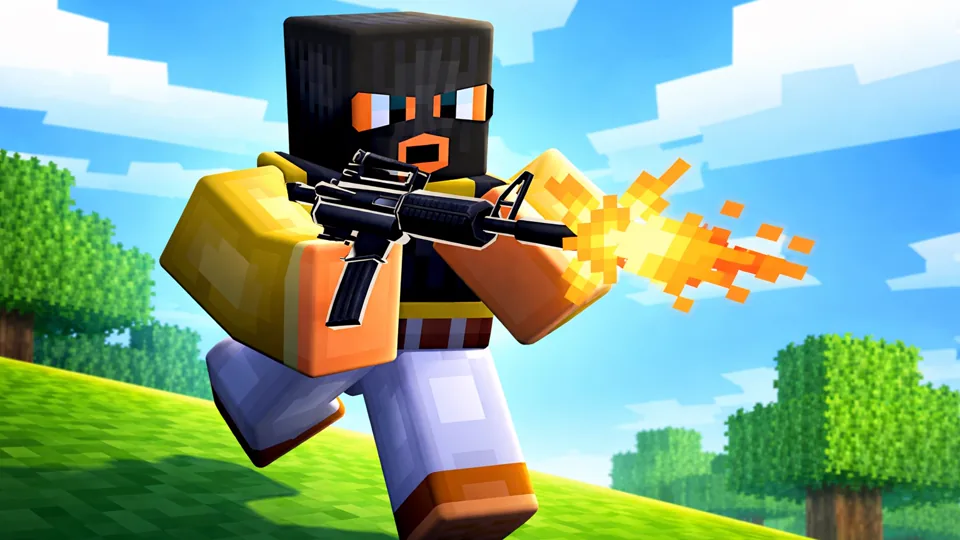
Poxel IO is a fast pixel FPS built around voxel arenas, multiplayer rounds, 20+ weapons, 30+ maps, cosmetics, and movement-heavy gunfights.
Voxel Aim, Real FPS Pressure
Poxel IO looks like a blocky voxel shooter, but the important decisions are not decorative. It is a fast first-person PvP game where movement, recoil control, weapon range, reload timing, and map position decide fights. The voxel look makes arenas readable: walls, crates, rooftops, corridors, ramps, and open lanes are easy to understand at a glance. That clarity helps new players learn quickly, but it also means mistakes are exposed quickly. If you cross a lane without cover, reload in the open, or sprint into a corner without checking angles, the blocky visuals will not save you.
Poxel IO plays like a PC-style arena shooter with fast rounds, a high skill ceiling, real-time multiplayer, leaderboards, advanced movement, multiple modes, diverse weapons, custom loadouts, and cosmetic progression. The arsenal spans more than twenty weapons across more than thirty maps, which fits the way the game feels: fast, varied, and built around repeated aim tests. It does not lean on slow auto-shooting or passive combat. Eliminations are earned through aim, movement, positioning, and choosing the correct fight.
The first match should be treated as a systems check. Learn the movement keys, fire one full magazine, reload, jump, sprint, test aim-down-sights if available, and feel how quickly enemies punish exposed movement. After that, the game becomes a sequence of small FPS choices. Which lane is safe? Which weapon fits the next angle? Can you reload before the push? Is the enemy likely to hold high ground? Should you challenge, rotate, or wait for a teammate?
Because matches are short and the time-to-kill can feel fast, improvement comes from reducing obvious deaths. Do not chase every opponent. Do not reload while visible. Do not sprint into the center of a map without a plan. Poxel IO rewards the player who turns each arena into a set of controlled engagements rather than one long panic fight.
Movement Tech and Weapon Roles
The standard control language is familiar: WASD moves, mouse aims, left click shoots, right click or E may aim down sights depending on the build, R reloads, Space jumps, Shift sprints, and X or Q can serve as a dash input. The principle is stable: movement is not just travel. Movement is defense, attack setup, and escape.
A still target dies quickly. A player who strafes while aiming, jumps only when it helps the fight, and uses sprint for rotation instead of blind entry survives longer. Slide or dash-style tools should not be wasted in straight lines toward danger. They are strongest for breaking an angle, crossing a dangerous gap, escaping after a shot, or repositioning before the enemy finishes a reload. The best movement creates a worse shot for the opponent and a better shot for you.
Weapon roles define which fights you should accept. Assault rifles and SMGs fit flexible mid-range pressure and active routes. Shotguns or close-range weapons want corners, surprise entries, and tight rooms. Snipers reward long lanes, rooftops, and disciplined aim. Launchers, grenades, and explosive tools pressure clustered enemies or predictable cover. Crossbows and unusual weapons often need timing and prediction. Melee is not a general plan; it is a high-risk finish when distance has already collapsed.
A large weapon pool rewards testing instead of loyalty. Fire rate, magazine size, recoil feel, projectile behavior, reload speed, and aim-down-sights value can matter as much as listed damage. A weapon that dominates one corridor can be awkward on a rooftop map. A sniper can feel powerful until the mode keeps forcing close tags or point pressure. The correct weapon is the one that matches the map and mode, not the one that looked strongest in the menu.
Custom loadouts make those choices more deliberate. A loadout is a promise about how you intend to play the map. If your gear favors close pressure, take side routes, corners, and flanks. If your gear favors precision, hold sightlines and avoid chaotic room entries. If the lobby keeps forcing you into a bad range, adapt instead of blaming the weapon. Poxel IO's skill ceiling is partly aim, but it is also honesty about where your current loadout is strong.
Cosmetics and progression add identity without replacing fundamentals. PX coins, gems, levels, missions, character looks, hats, back items, and weapon skins give the player something to work toward, but they do not remove the need for clean FPS habits. A new skin does not fix poor crosshair placement. The core game remains aim, movement, and decisions.
Modes Change the Correct Play
Poxel IO's mode set gives the same maps different priorities. Free-For-All makes every sound and angle a threat, so survival positioning matters more than loyalty to one lane. Team Deathmatch rewards space control and teammate trades. Kill Confirmed adds dog-tag collection after eliminations. Domination makes capture points more important than random duels. You want quick picks, fast relocations, and constant awareness of third-party danger. Standing still after an elimination invites the next player to clean up the fight.
Kill Confirmed is a good example of mode pressure changing behavior. A long-range elimination is not complete if the tag is left in a dangerous lane. Rushing every tag is also a mistake if enemies are watching it. The best play may be to clear the second angle first, then collect. Objective rules turn aim into a sequence: win space, secure the value, then leave before the trade arrives.
In team modes, holding useful space with teammates is stronger than chasing alone. A player watching a flank, covering a reload, or controlling a rooftop can matter more than a player sprinting for isolated kills. Team play rewards overlapping angles. If one teammate pressures a lane, another can hold the exit. If enemies group around a corner, explosives or mid-range rifles can punish the cluster. If your team keeps losing the same route, rotate together instead of feeding one by one.
Objective modes demand even more discipline. A player protecting a point, confirming an elimination, or denying a retake may produce more value than a player with a prettier kill count. The right question is not always "Can I win this duel?" Sometimes it is "Does this duel help the objective?" If the answer is no, rotate, hold cover, or wait for support. Poxel IO's speed makes reckless action tempting, but the mode decides the correct risk.
Private rooms are useful for learning without the noise of public matchmaking. Use them to test weapon ranges, routes, movement tech, rooftop exposure, and reload timing before public matches.
Cosmetics make the character feel personal, while missions give direction. None of that changes the core rule: the player who understands the angle, range, and reload state wins more often than the player with the flashiest look.
Better First Matches
The fastest way to improve is to study death location. If the same lane keeps killing you, the map is giving feedback. Maybe high ground watches the crossing. Maybe your weapon is wrong for the distance. Maybe you enter without checking the corner. Maybe you reload in the same exposed spot every time. Fix one habit at a time. Do not try to transform aim, movement, loadout, and map knowledge all at once.
Crosshair placement should stay near likely enemy height before the fight begins. Beginners often aim at the floor while moving, then waste time dragging the aim upward when an enemy appears. Better players pre-aim doorways, rooftops, corridor exits, and common cover edges. This small habit wins fights before recoil control even starts.
Reload discipline is just as important. Reload behind cover, after a retreat, or when a teammate can cover the lane. If the magazine is not empty but the next fight is likely, reload before the push. If enemies are near, switching position may be safer than finishing the reload where they last saw you. A reload sound or pause can become an invitation for an enemy to rush.
Movement should make angles uncomfortable. Strafe during fights, sprint between positions, jump only when it improves survival or route timing, and use any dash-style option to break line of sight rather than to enter a duel unprepared. The goal is not constant motion for its own sake. The goal is to make yourself harder to hit while keeping your own aim usable.
Poxel IO is quick FPS structure with blocky readability, competitive PvP, weapon variety, private-room practice, and cosmetic progression. Peaceful building, mining, crafting, and slow survival are not the loop. The voxel style belongs in a block-game catalog, but the skill test belongs to arena shooters. Treat the first sessions as aim plus route training, respect weapon range, and let each match teach one cleaner decision.