


Pixelio Online
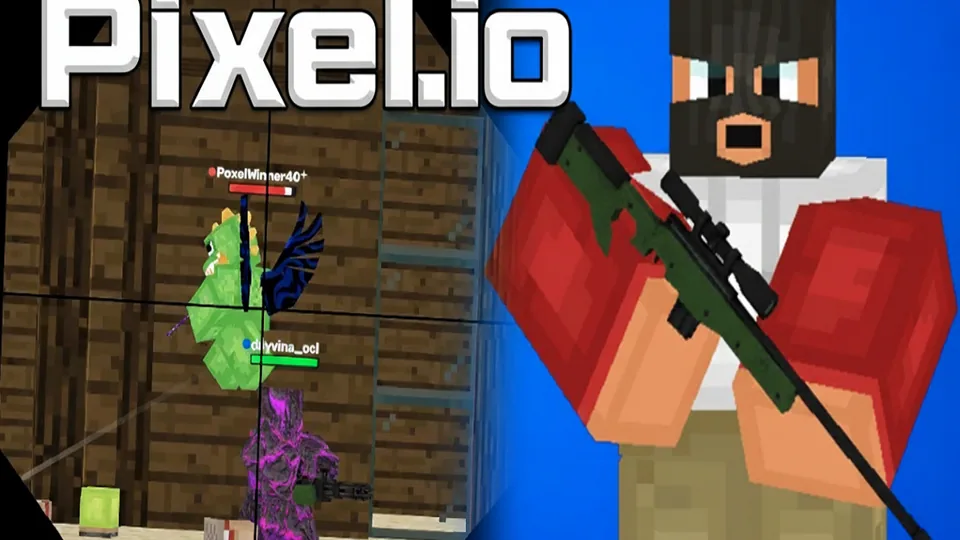
Pixelio is a fast pixel-style multiplayer shooter where movement, dash timing, aim, weapon range, and map control decide short arena matches.
Poxel-Style Pixel FPS
Pixelio is a fast pixel-style shooter that lines up with the Poxel.io multiplayer FPS format: compact maps, quick movement, simple visuals, and short fights where hesitation gets punished. It is not a slow pixel art platformer or a drawing game. The main loop is online combat: move, aim, shoot, dodge, dash, reposition, and learn the map faster than the players around you.
The clean pixel look helps the game stay readable. Walls, floors, rooftops, ramps, corridors, and enemies are easy to parse. That readability makes matches faster because players can identify threats quickly. It also means there are fewer excuses. If you stand in the open, chase a bad duel, or forget to move after firing, the mistake is obvious.
Pixelio shares the same practical play language as Poxel.io: fast multiplayer shooting, diverse maps, dash control, weapon choice, mode objectives, private games, PX coins, gems, levels, missions, and cosmetic progression. The important habits are fast feet, clean aim, map awareness, and objective reading before cosmetic chasing.
Modes, Coins, and Combat Routes
The core loop in Pixelio is enter a match, move constantly, take short fights, reposition, and repeat. The control structure is familiar: WASD for movement, Space for jump, Q or X for dash, left click to shoot, right click or E to aim, Enter for chat, and Esc for pause. Those inputs explain the rhythm: feet first, aim second, escape route always.
Movement is the difference between Pixelio and a static shooting gallery. Jumping changes timing. Dashing breaks aim, crosses gaps, reaches cover, or disengages from a losing fight. Running near walls reduces the number of angles that can see you. High ground gives better information but can make you visible. Open lanes reward aim, while tight corridors reward quick reactions and close-range weapons.
Poxel.io movement guides make that point even sharper. Players talk about b-hopping by holding jump while moving, dash canceling to keep momentum, and revolver-style movement tricks such as rev dashes that help close space for a high-damage shot. You do not need to master every trick immediately, but the lesson is clear: Pixelio rewards players who treat movement as a weapon rather than a background action.
Weapon choice should match the map. The arsenal can include assault rifles, rocket launchers, snipers, crossbows, grenades, and knives. A fast weapon is useful in corridors where fights start suddenly. A more accurate weapon is better when you can hold a sightline. Heavy damage matters if you can control distance, but it becomes unreliable if faster players dash around you. If the game gives multiple loadouts, do not judge them only by damage. Handling, range, reload timing, and movement compatibility matter just as much.
Community advice also warns against aiming down sights too often with weapons that remain accurate from the hip. Scoping can slow your visual read, remove or obscure the crosshair in some builds, and make close fights feel worse. Snipers are the obvious exception because the scope defines their role. For rifles, revolvers, and shotguns, test hip fire first, then use aimed fire only when distance demands it.
Pixelio also rewards map memory. With a large rotating map pool, compact arenas can feel chaotic at first when enemies appear from every direction. After a few rounds, patterns emerge: common rooftops, flank routes, spawn approaches, cover corners, and places where players tunnel vision on fights. Learning those routes turns random reactions into planned movement.
Mode rules change the value of those routes. Free For All makes every nearby player a threat. Team Deathmatch asks you to read labels and avoid wasting shots on allies. Kill Confirmed adds a second step after the elimination because dog tags matter. Domination makes the objective point more important than a random duel at the wrong side of the map. The same dash and aim skills apply everywhere, but the reason for moving changes by mode.
The best match rhythm is controlled speed. Running nonstop without reading angles gets you eliminated. Standing still to aim perfectly makes you predictable. Pixelio sits between those extremes: move enough to be hard to hit, pause just long enough to fire accurately, then move again before the next player arrives.
Key Highlights
- Keep moving after every shot or elimination so enemies cannot pre-aim your last position.
- Use dash to reach cover or reset a fight, not only as a panic button.
- Keep jumping while moving through exposed areas if the current build supports stable b-hop movement.
- Tune sensitivity before judging aim; a bad sensitivity setting makes every weapon feel worse.
- Stay near walls when crossing unknown areas to limit surprise angles.
- Use high ground for visibility, but leave before everyone starts aiming at you.
- Match weapons to distance: close weapons for rush routes, accurate weapons for long lanes.
- Learn where players respawn or re-enter fights so you can predict movement.
- Use chat, missions, skins, coins, gems, or private matches as secondary systems, not the core skill.
Fast Arena Rhythm
Pixelio is a fast pixel shooter built around short multiplayer FPS rounds. It starts quickly, but it still rewards actual FPS fundamentals: movement, cover, route choice, weapon range, and reload discipline.
Pixelio runs on short, high-energy matches where aim, movement, and route choice can be practiced immediately. The pixel/block presentation reduces clutter, so fights are easier to read than in many realistic FPS games.
Slow tactical planning, stealth, and large survival worlds are outside its core. Pixelio is about reactions and repositioning. Objectives and modes may vary, but the baseline is fast combat, and deaths function as quick feedback rather than long failures.
Compared with Blockpost-style shooters, Pixelio feels more arcade-forward. The dash key, compact maps, and constant repositioning make movement more central. Compared with pure .io territory games, it is much more about aiming and weapon handling.
If progression is active, treat PX coins, gems, missions, skins, characters, hats, back items, and cosmetics as motivation. Large cosmetic pools give each match a reward target, but they do not replace the fundamentals: keep moving, learn maps, pick the right weapon, and avoid giving enemies free shots.
First-Round Survival Habits
Use the first life to read movement speed, dash distance, firing feel, reload timing, and the nearest cover routes before judging the first fight.
Also check settings before blaming the weapon. If camera animation or heavy view movement makes reloads and turns hard to read, reduce the visual distraction if the setting exists. Then find a mouse sensitivity that lets you turn quickly without overshooting close targets. Pixelio is too fast for a setup that fights your hand.
For the best first session, pick one skill goal. Survive longer. Use dash only for cover. Keep your crosshair higher. Stop reloading in open space. Learn one rooftop route. Win one close fight without spraying wildly. Small goals turn chaotic matches into practice.
Do not chase every damaged enemy. A weak opponent running around a corner may be baiting you into another player. Secure space first, then finish fights when the angle is safe. This matters more in compact maps because third-party attacks arrive quickly.
Use dash before you are desperate. If you wait until your health is almost gone, the dash often comes too late. Dashing early into cover, across a lane, or out of a bad angle keeps you alive for the next duel.
Once the basics are stable, add one movement layer at a time. First keep jumping during rotations so you are harder to track. Then practice dash timing around corners. Then learn whether your chosen weapon supports a fast entry shot after a dash. Trying to learn aim, dash canceling, rooftops, weapon swapping, and objective rules all at once usually turns the round into noise.
When you lose repeatedly, change your route before changing your weapon. Many players blame guns when the real problem is entering the same bad lane every life. Try a wall route, a high route, or a flank route. Pixelio rewards players who stop repeating predictable approaches.
Finally, keep your sessions short enough to stay sharp. Fast pixel shooters punish tired reactions. A few focused rounds with one clear improvement goal will help more than a long session of rushing and frustration.