Parkour Block Online
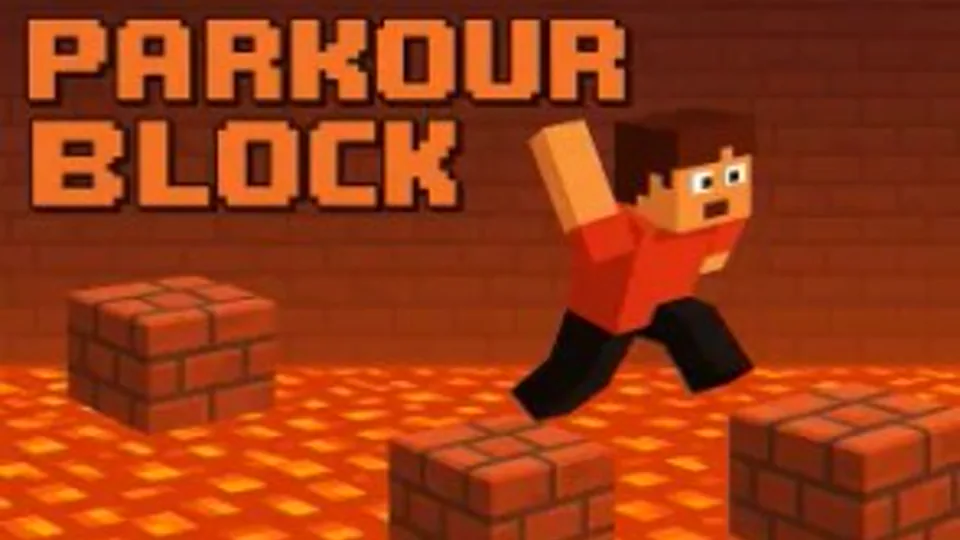
Parkour Block is a first-person block platformer where you jump across floating brick paths, avoid lava, and reach the purple portal across skill-based levels.
First-Person Block Parkour
Parkour Block is a first-person block platformer that takes the familiar Minecraft-style visual language and removes almost everything except movement. There is no mining route, crafting tree, survival base, or open-world building plan. The goal is simple: cross floating brick platforms, stay out of the lava, and reach the purple portal at the end of the course.
The Parkour Block 3D formula is built around 35 short levels, first-person movement, lava hazards, portal finishes, and performance pressure through faster or cleaner clears. Later entries in the series add their own variations, but the core identity stays the same: short blocky courses where one bad jump resets the attempt.
That simplicity is why the game works. The controls are easy to read, but the camera makes each jump tense. In first person, you do not always see your exact foot position. A platform that looks close can still be missed if your angle is wrong, your sprint is late, or your landing clips the edge. Parkour Block turns distance judgment into the whole skill.
That first-person uncertainty is the main difference between Parkour Block and a side-view platformer. You are not judging a visible character arc from the outside. You are estimating where the body is from the camera, the block edge, and the motion speed. A clean jump starts with the view already lined up. A missed jump often begins before the player leaves the platform, when the camera is slightly diagonal or the sprint key is pressed before the angle is stable.
Thirty-Five Levels of Distance Judgment
The common Parkour Block 3D structure uses a 35-level campaign. Each level asks for the same broad objective, but the arrangement changes: different gap lengths, different platform sizes, lava below, narrow landings, moving platforms, slippery blocks, and portal endpoints that force route reading. Because every stage can be retried quickly, failure becomes information rather than a long punishment.
The first levels teach basic jump length. Later routes ask for sprint control, sharper camera turns, and better landing discipline. Moving platforms introduce timing. Slippery surfaces punish edge contact. Smaller blocks punish careless alignment. Longer gaps require commitment. The game rarely needs complicated rules because the platform layout itself creates the difficulty.
The purple portal matters as a route anchor. Before moving, locate it. Then read the path backward or forward: which blocks are safe pause points, which jumps require sprint, where the camera must turn, and which landing will set up the next jump. A player who only looks at the next block often reaches a dead angle. A player who reads the route reaches the portal with fewer panic turns.
Route memory should be built in chunks. Do not try to memorize an entire difficult level at once. Learn the first three jumps, then the next turn, then the moving-platform section, then the final approach to the portal. Once each chunk is stable, link them. This is faster than repeating the whole course blindly because it turns every fall into information about one specific segment.
Controls and Camera Discipline
Parkour Block uses the standard first-person platforming setup: WASD or arrow keys to move, mouse movement to rotate the view, Space to jump, left Shift to sprint when extra momentum is needed, and double Esc to return to the menu. The control list is short, but using it well requires restraint.
Sprint is not always better. Too much speed makes small platforms harder to center. Too little speed fails long gaps. The useful habit is deciding before each jump whether sprint is needed. If the gap is short, walk or tap movement carefully. If the gap is long, align first, then sprint and jump together.
Camera angle is the hidden difficulty. A good jump begins before leaving the block. Face the platform squarely, avoid diagonal drift unless the route demands it, and keep the next landing in view. On hard landings, looking slightly down helps estimate position. The visible character hand can also work as a reference point because first-person games make body placement harder to judge.
Stars, Speed, and Clean Runs
Parkour Block uses a three-star performance layer tied to how quickly and cleanly a level is cleared. That changes the long-term goal. Finishing a level proves the route is possible. Finishing it quickly, with fewer falls, and with cleaner transitions proves the route has been learned.
Do not chase stars on the first clear. The first clear should map the route. The second clear should reduce obvious mistakes. Only after the route feels predictable should speed matter. This order prevents the common mistake of sprinting into unknown platforms and calling the result bad luck.
A strong run has rhythm: pause briefly at safe blocks, align the camera, jump with the right speed, land near the center, then turn before the next jump becomes urgent. The run looks slower at first, but it becomes faster because it avoids resets. Parkour Block rewards controlled movement more than constant acceleration.
Platform Types and Route Reading
Large static blocks are recovery points. Use them to stop, breathe, and line up the next section. Small blocks are precision checks. Land in the center and do not rotate wildly while landing. Long gaps are momentum checks. Moving platforms are timing checks: wait for the platform to come into reach, commit, then ride or leave it at the right moment. Slippery platforms are discipline checks because edge landings can turn into slides.
The safest strategy is to name the type of jump before taking it. Is this a normal jump, sprint jump, timing jump, correction jump, or landing setup? Once you know the type, the input becomes clearer. Many failures come from using the same movement for every gap even though the platform layout has changed.
Lava creates the consequence, but it is not the real enemy. The real enemy is bad preparation: jumping before the camera is aligned, sprinting when a careful step would work, landing on the edge, or turning midair without a plan. Each fall usually points to one readable cause.
Moving platforms deserve a separate rhythm. Wait until the platform is moving toward your jump line, not only until it is nearby. Jumping onto a platform that is already drifting away forces an immediate correction and often ruins the next jump. When possible, land near the center, let the platform carry you for a beat, and leave from a stable edge instead of jumping again while still sliding.
Practical Clear Strategy
Start each level by standing still for one second. Locate the portal. Read the first three platforms. Decide which jump needs sprint. Then move. This small pause prevents most early falls.
Land toward the center whenever possible. Edge landings are risky because the next movement starts from a bad position. If you land near an edge, stop and reset your angle instead of forcing the next jump immediately. A half-second correction is faster than falling into lava.
Use first attempts as scouting on difficult levels. Learn moving-platform timing, identify safe pause points, and remember where the route turns. After that, link the jumps together. Parkour Block becomes less frustrating when each retry has a purpose: better alignment, cleaner sprint timing, safer landing, or faster route memory.
The game is short, skill-based first-person platforming with obvious failures and quick improvement. It is not a Minecraft survival substitute. It is a pure movement challenge wearing blocky visuals: jump, land, correct, retry, and finally step through the purple portal with a route that feels earned.
If you are chasing cleaner clears, separate survival lines from speed lines. A survival line uses extra pauses, center landings, and careful camera resets. A speed line cuts those pauses only after the safe version is consistent. The fastest route is rarely the first route that works; it is the safe route with unnecessary hesitation removed one piece at a time.