
Minefun Online
Minefun is a multiplayer cube game where players build, battle, run parkour, survive zombies, and join block-world modes like Bed Wars and Sky Wars.
Vectaria Block Mode Hub
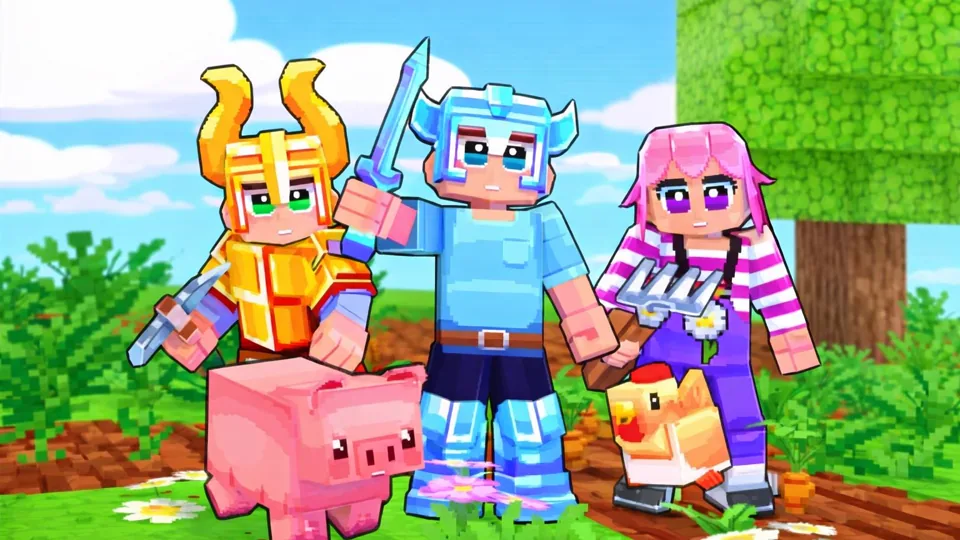
Minefun is a multiplayer cube game built around block-world freedom and mode variety. It shares the familiar Minecraft-like language of blocky worlds, building, crafting, exploration, and survival, but its strongest hook is mode choice. The Vectaria-style structure lets players create a character, enter different maps, and play with others across obby challenges, zombie survival, team battles, creative construction, and sky-island combat.
That makes Minefun different from a slow single-world sandbox. It supports quick building tests, movement challenges, competitive rounds, zombie-style survival fights, and rooms with friends. The mode list includes Parkour, Creative, Hide and Seek, The War, Sky Wars, One Block, Bed Wars, Sandbox, Raid, Infection, Steal a Pet, and newer social/action rooms. Minefun is not just a single Minecraft-style world. It is a mode-driven block hub where one session can become a parkour run, a sky-island fight, a creative build, or a team objective match.
It also has a social layer that matters. Private rooms, shareable room codes, friends, and request menus push Minefun toward quick multiplayer sessions rather than isolated long-term survival worlds. You are choosing a room, a mode, and a rhythm first; the block-game language is the shared toolset underneath.
Recent MineFun mode lists also show how wide the hub has become: Infection and Parkour sit beside Creative, Hide and Seek, The War, Sky Wars, One Block, Bed Wars, Sandbox, Raid, Steal a Pet, Dress Up, and custom games. That range matters because the same character can move from a parkour obstacle route to a base-building raid, then into a pet-heist loop or a theme-based dress-up round. Minefun is at its best when the player treats the menu as a set of small games sharing one blocky identity.
Modes, Movement, and Room Codes
Controls are close to standard voxel games, though exact actions can change by mode. Move with WASD or the arrow keys, jump with Space, crouch with the listed crouch control, and use the mouse to control your view. In building or sandbox-style rooms, the familiar flow is to place, break, or interact with blocks and switch items quickly. In combat or team rooms, movement, aim, and fast reactions matter more than careful crafting. In parkour or obby rooms, jump timing and camera discipline become the core skill.
The loop changes depending on what you choose from the menu:
Bed Wars is the clearest team objective mode. The point is to defend your own bed while trying to destroy other teams' beds. Once a bed is gone, respawn safety changes, so defensive building and attack timing matter as much as direct fighting. Sky Wars moves the conflict to floating islands, where you gather blocks or gear, bridge between platforms, and avoid falling while fighting other players. Parkour is a different test entirely: it strips the block-world idea down to movement, timing, and route reading.
The War, Raid, and Infection sit closer to action survival. The War creates team pressure and direct fighting. Infection asks for distance control, routes, and group positioning as the threat spreads. Raid is the more dangerous long-form action mode: recent MineFun notes describe weapons, crafting, base building, allies, possible betrayal, and a limited 1500x1500 map. That means Raid is not just another duel; it rewards scouting, storing supplies, choosing allies carefully, and knowing when a base location has become too obvious.
Creative and Sandbox isolate the block-building side without immediate match pressure. They are useful for learning camera movement, testing construction ideas, and getting comfortable before entering PvP. One Block gives a more constrained block-game prompt, while Raid, The War, Infection, and zombie survival modes push the game toward combat, survival, or wave pressure. The variety is the product. Minefun becomes clearer when each room is treated as its own rule set rather than as one giant sandbox.
Sandbox has its own social rules. A quiet build can turn into a shared room, and visibility matters when other players are nearby. MineFun's update notes mention username visibility through walls in Sandbox and crouching as a way to hide that name marker. That single rule changes how players behave: crouch becomes part of stealth, base privacy, and approach timing, not only an edge-control button.
There is also lightweight progression through coins, skins, and character personalization. That does not turn the game into an RPG, but it gives the character layer continuity between rooms. Private rooms and room codes turn Minefun from a public block hub into a controlled shared session.
Steal a Pet and Dress Up show the lighter side of that progression. Steal a Pet is about collecting, protecting, and sneaking into other players' bases to take pets, so it uses the block-world space for heist pressure rather than pure combat. Dress Up points the social layer in a different direction: timed themes, outfit choices, and presentation. Those modes make Minefun broader than a PvP menu by giving the hub social routes beyond another Bed Wars or Sky Wars round.
Key Highlights
- In building sessions, plan a small structure first so your resource and block choices stay organized.
- In survival-style play, collect materials and improve tools before wandering into dangerous areas.
- In Bed Wars or Sky Wars, treat movement, hotbar switching, bridge placement, and quick defense as combat skills.
- In Hide and Seek, map knowledge and disguise discipline matter more than crafting.
- In Parkour, focus on jump timing and camera control before worrying about speed.
- In zombie or Infection-style rooms, keep distance, watch spawn pressure, and move with teammates instead of standing alone.
Multiplayer Block-Game Mode Structure
Minefun is an online block game built around more than simple construction. Minecraft-style controls sit under multiplayer rounds, obstacle courses, zombie fights, team modes, and social rooms. The result is closer to a room-based block playground than one long solo survival world.
The game is not a version-specific survival branch. It is an independent cube-game hub where the next room might be Sky Wars, Bed Wars, Parkour, Hide and Seek, building, Infection, One Block, or survival.
The strongest expectation is "block multiplayer playground." Minefun is less about preserving one canonical world forever and more about jumping between short rule sets. Parkour gives a finish line. Bed Wars gives a team objective. Sky Wars gives fast elimination pressure. Hide and Seek gives stealth and map knowledge. Creative gives a place to relax between structured rounds.
The modes teach through contrast. Parkour teaches movement and camera patience. Bed Wars teaches defense before aggression. Sky Wars teaches island awareness and fast looting. Hide and Seek teaches how maps communicate hiding spots. Raid teaches supply discipline and trust management. Steal a Pet teaches base reading and timing. Those lessons transfer across modes because the controls stay familiar while the objective changes.
Pick One Mode First
For the first session, pick one mode and learn its rhythm. Creative and Sandbox are clean control-practice spaces, Parkour gives movement feedback, and PvP/PvE modes apply immediate pressure. Minefun becomes clearer when every room is treated as a distinct rule set instead of the same sandbox with different labels.
In Bed Wars, do not rush away from your base without understanding how respawns work. Protect the bed first, learn the shop or item flow if the room provides one, then attack when you can return safely. In Sky Wars, check the island edge before every fight; falling can end a good round faster than losing a duel. In Parkour, slow attempts are better than random sprinting. Learn platform spacing, then build speed once the route is clear.
For Hide and Seek, watch how other players move and where the map creates natural hiding places. A good hiding spot is not only concealed; it matches the environment and does not force you to move constantly. For zombie or Infection-style modes, avoid isolated corners unless you have an escape route. Block games punish players who forget vertical space, so think about bridges, ledges, stairs, and cover.
For Raid, do not trust the first quiet minute. Gather before fighting, place a base where routes are readable, and keep important materials separated so one raid does not erase everything. If allies are part of the room, coordinate roles clearly: builder, scout, fighter, and resource runner. A betrayal-friendly mode turns vague teamwork into a liability, so clear plans matter.
Private rooms or room codes help when a group needs continuity. Public rooms are good for quick matchmaking, but shared rooms are better when the goal is to practice a specific mode, build together, or run several rounds without losing the group. Minefun is strongest when the mode, the room, and the group all support the same session rhythm.