

Melon Sandbox Online
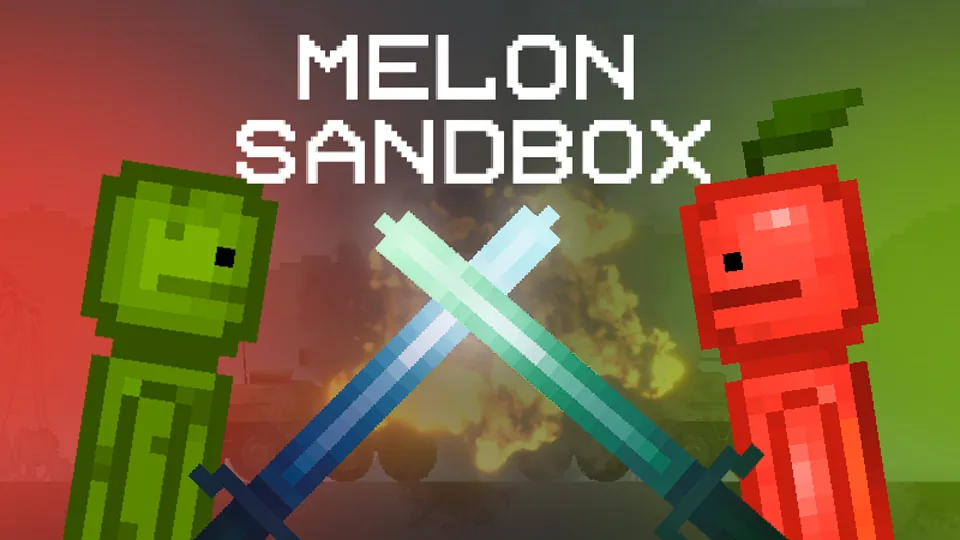
Melon Sandbox is a ragdoll physics playground where you place characters, weapons, vehicles, tools, maps, cloth, forces, and props to create, test, destroy, and rebuild experiments.
Ragdoll Physics Test Bench
Melon Sandbox is a ragdoll physics sandbox built around setup, reaction, and revision. Instead of giving you a campaign route, it gives you a scene, an object library, and permission to combine characters, props, machines, vehicles, weapons, explosives, and environmental pieces until the physics produce something interesting. The useful mental model is simple: create, test, destroy, repeat.
Melon Sandbox is built around realistic ragdoll physics, open-ended destructive experiments, maps, vehicles, firearms, melee tools, explosives, and custom devices. It sits in the same broad experiment tradition as Melon Playground, People Playground, and Garry's Mod: not because it copies one fixed mission structure, but because it gives the player tools and lets the simulation answer. The fun is not winning a stage. The fun is building a situation and watching whether the physics behave the way you expected.
That makes Melon Sandbox useful as a fast experiment space. You can build a small crash test, arrange a staged combat scene, connect moving parts into a strange machine, compare two tools, or place obstacles and watch the ragdoll physics expose what works. A compact build may not contain every map, event, mod, or editor feature from the full app ecosystem, but the core loop remains the same: place objects, trigger forces, study the result, then improve the setup.
The object categories create different kinds of questions. Ragdolls show impact and posture. Props create walls, supports, traps, and collision targets. Vehicles test balance, momentum, and wheel placement. Firearms and melee weapons test direct force. Explosives test radius, timing, and chain reaction. Maps decide whether the scene has flat room, vertical drops, pits, ramps, or obstacles. A strong experiment chooses the category that answers the question instead of adding every category at once.
The current Melon Sandbox ecosystem is larger than a simple ragdoll room. The main app has passed the 100-million-download mark on Google Play and keeps receiving major updates, including a June 25, 2026 update with cloth mechanics, cloaks, flags, fireproof clothing, wind behavior, new vehicles, coral items, Lua scripting through a chip item, new worlds, water changes, lava pressure changes, and stability fixes. Those details matter because they show the direction of the game: not only more objects, but more kinds of physical interaction.
Place, Trigger, Observe, Revise
The core loop in Melon Sandbox is pause, place, connect, activate, observe, and adjust. Pausing or slowing the scene is important because physics sandboxes become unreadable when too many parts move at once. Start with one melon-style character, one prop, and one force. Once you understand how weight, collision, and momentum behave, add a weapon, vehicle, explosive, ramp, hinge, thruster, or scenery piece.
The most satisfying experiments usually have one clear question:
Those questions are better than filling the whole map with every item at once. A crowded screen can look exciting, but it teaches very little. A clean setup lets you see why a vehicle tips forward, why a stack collapses, why an explosive launches objects sideways, or why a joint fails under pressure.
Melon Sandbox also rewards mechanical thinking. Vehicles are not just toys; they are physics puzzles. A wheel placement can change the whole result. A ramp can make a crash test cleaner or ruin it. A heavy prop can anchor a machine or pull it apart. A small force in the wrong direction can destroy the scene before the intended reaction begins. Each failure is useful feedback because the simulation shows the design mistake immediately.
The wider ecosystem adds another layer through maps, mods, editor support, event items, custom devices, and user-made content. Compact builds can be narrower, so the safest expectation is to start with the tools available in the current version. If the object library includes vehicles, use them. If it includes weapons and explosives, test them in controlled scenes. If it includes maps or custom objects, treat those as ways to add structure to the experiment rather than as a reason to skip planning.
Controlled comparison is the fastest way to learn the library. Build one scene and change only the active tool: first a melee hit, then a firearm shot, then an explosive, then a vehicle impact. Or keep the tool the same and change only the distance. If the reaction changes, you know what caused it. That method turns a chaotic sandbox into a readable physics lesson without removing the fun of destruction.
The new interaction types make controlled comparison even more important. Cloth changes how bodies and objects snag, block, or swing. Wind changes the path of light parts and flags. Fireproof clothing changes what can survive heat. Water and lava changes alter how objects move, resist, burn, or fail. A scripting chip changes the question from "what happens if I push this?" to "what happens if I make a rule trigger at the right time?" Each new system is powerful only when the player can isolate it.
Key Highlights
- Can this vehicle cross a gap without flipping?
- What happens if a falling object hits a line of props?
- Can a ramp, wheel, and thruster produce stable movement?
- Which tool creates a cleaner reaction in the same setup?
- How many parts can be added before the scene becomes too chaotic to read?
Physics Experiment Structure
Melon Sandbox is a physics playground, not a fixed mission list. It belongs with ragdoll sandboxes, Melon Playground-style experiments, People Playground-style scene building, physics destruction games, and vehicle experiment tools. The key is to approach it as an experiment bench instead of a score chase.
Its core question is "what happens if these pieces are combined?" People Playground-style experiments, loose building, vehicle tests, chain reactions, and controlled chaos matter more than score targets. The freedom comes from inventing a scenario and then letting the physics answer.
Guided progression, balanced combat, story missions, and calm construction are outside the center. Melon Sandbox can be creative, but it is not the same kind of creativity as Block Craft. It is closer to a laboratory than a village builder. The objects are interesting because they collide, break, launch, fall, and react.
Melon Sandbox is especially strong as staged scene design. A setup can become a crash lab, a weapon comparison range, a cloak-and-wind test, a vehicle stunt, a water hazard, or a scripted mechanism, then be revised until the motion looks intentional. That is different from pure destruction. Destruction is the result; scene design is the craft.
Controlled Chaos Setup Habits
Start with one object interaction and confirm how dragging, spawning, pausing, deleting, and activation work. Physics sandboxes can feel confusing if you begin with the biggest possible setup before learning the object library, scene controls, camera, and basic actions.
For the best session, play one clear experiment at a time. Build a vehicle that can cross a gap, test how a stack collapses, compare two tool setups, or tune a chain reaction until it triggers reliably. A clean setup teaches more than filling the screen with every object at once.
Use pause as a design tool. Arrange the scene while nothing is moving, then release it when you are ready to observe. If the result fails instantly, change one variable. Move the ramp. Adjust the wheel. Reduce the number of objects. Add weight. Remove an explosive. Good sandbox play is closer to debugging than button mashing: isolate the problem, change one thing, and run the test again.
Keep performance in mind. Physics simulations can become heavy when too many objects, particles, vehicles, or active reactions exist at the same time. If the scene slows down, simplify it before assuming the game itself is broken. Delete unused props, run fewer moving parts, or test on a smaller map area.
Finally, treat failed contraptions as the point. Melon Sandbox is strongest when the simulation surprises you. A machine flipping over, a vehicle collapsing, or a chain reaction firing in the wrong direction is not a wasted run. It is the physics engine telling you exactly what your design did.
A good long session usually evolves in layers. First confirm the object controls. Then make one stable test. Then add a second variable. Then turn the successful setup into a messier scene. If you skip straight to the mess, the result may look impressive but feel random. If you build in layers, every explosion, crash, and collapse carries information you can use in the next setup.
For a full-feature sandbox session, build a ladder of complexity. Start with a ragdoll and one prop. Add a weapon. Add a vehicle. Add an environmental force such as water, lava, or wind if available. Add clothing or cloth only after the body movement is readable. Add scripting last, because a script can hide the real physical cause of a result. This order keeps the experiment understandable while still leaving room for large chaotic scenes.