

GrindCraft Online
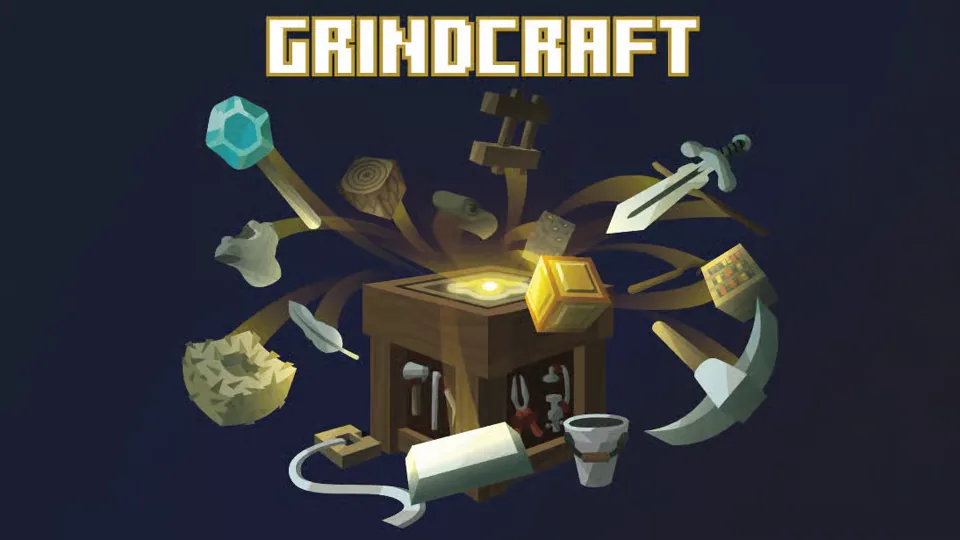
GrindCraft is a Playsaurus crafting clicker with Overworld, Mine, Food, and Mobs resources, tool tiers, village workers, and long recipe chains.
Minecraft Recipes Turned Into an Economy
GrindCraft is a crafting clicker from Playsaurus that takes the recipe logic of Minecraft and turns it into a resource economy. It is not about walking through biomes or placing blocks by hand. It is about clicking raw materials, converting them into ingredients, reading craft costs, unlocking stronger tools, hiring villagers, and slowly turning manual gathering into a production chain.
The opening is intentionally familiar. Wood becomes planks. Planks become sticks. Sticks support tools. Tools unlock better gathering. Four planks push the first crafting table into view, and that table changes the run from simple clicking into recipe routing. A wooden pickaxe is not only an item; it is permission to start mining. A stone pickaxe improves output and access. Iron pushes the recipe tree into buckets, stronger tools, and more specialized items. Diamond becomes the high-efficiency tier that can mine almost anything worth chasing.
The important difference from a normal idle game is that GrindCraft is not only asking for bigger numbers. It is asking you to understand dependency. A bucket is not valuable by itself; it may be the missing piece for water. Water may be the missing piece for a plot. A plot may be the start of wheat. Wheat may support food, villagers, or another recipe chain entirely. One raw material can become the entrance to a different economy.
That makes the game more deliberate than its clicker surface suggests. Clicking faster helps early, but planning better matters more once the tree opens up.
The first location, City State, shows this clearly. It is a dense starting economy with hundreds of craft slots and a long path toward a port, which later opens travel into another location. The early goal is to build enough village infrastructure for huts, farms, specialized workers, iron production, leather needs, gold, diamonds, map pieces, boats, and eventually the port.
Reading the Craft Tree
The interface teaches progress through availability. Resource icons are clicked to gather materials, and craftable items raise the next question: do you have the ingredients, or are you missing a sub-recipe? Bright craftable panels and recipe hints turn confusion into a checklist.
Do not treat a locked recipe as a wall. Treat it as a map. If an item needs sticks, planks, and stone, work backward. If it needs iron, ask whether the current pickaxe can gather iron efficiently. If it needs food or mob drops, stop over-clicking wood and open the category that actually supplies the missing material.
The main resource groups usually behave like separate departments:
The departments matter because recipes often cross them. A player who only grows the Overworld side will eventually hit a hard stop. A player who balances Mine, Food, and Mobs can keep new recipes moving instead of waiting on one forgotten ingredient.
This is why GrindCraft punishes tunnel vision. A player can have plenty of wood and still be stuck because the next village craft needs stone walls. A player can mine constantly and still be blocked because a wheat field, door, or water bucket is missing. The craft tree is a dependency graph disguised as a menu.
Key Highlights
- Overworld supplies the basic surface economy, especially wood and early materials.
- Mine supplies stone, ore, metal tiers, and the materials that upgrade tools.
- Food supplies crops, livestock logic, and recipe chains tied to farming.
- Mobs supply drops that cannot be solved by mining harder.
Tools Decide What Time Is Worth
Tool upgrades are the cleanest progression signal in GrindCraft. A weak tool makes gathering slow and limited. A better tool changes both speed and reach. That is why a pickaxe upgrade should not be delayed too long just because the material cost looks expensive.
A wooden pickaxe helps you leave pure wood collection, but it is not a long-term solution. A stone pickaxe improves mining and opens more useful ore flow. Iron broadens the economy because it appears in recipes that are not simply more tools. The first iron pickaxe accelerates mining, while a bucket brings water into the village chain. Diamond is the major efficiency leap because it reduces the time cost of advanced materials.
The same principle applies beyond pickaxes. If an item makes a slow resource cheaper, faster, or automatic, it is probably more valuable than another one-time craft. GrindCraft rewards items that reduce future clicking. A tool is not just a product; it is a multiplier on every recipe behind it.
This is the heart of good play: spend resources where they lower repeated friction. If you are manually waiting for the same material every few crafts, that material is not merely low. It is the current bottleneck.
Villagers Turn Clicking Into Production
The second half of GrindCraft begins when villagers and worker roles enter the economy. Early manual clicking is useful because it teaches material relationships. Automation becomes powerful because it lets basic resources accumulate while you study the next branch.
Villagers are not a single upgrade. They are a workforce system. The basic villager path asks for village materials rather than only raw resources: water, soil, seeds, wheat, doors, and stone walls. That chain is easy to underestimate because it crosses Overworld, Mine, and Food requirements at the same time.
Woodsman and Miner roles are especially valuable early because wood and ore feed so many recipes. Wood becomes planks, sticks, crafting components, doors, huts, and support materials. Ore becomes tool upgrades, metal recipes, buckets, armor paths, and late-game components. If either stream is weak, the whole tree slows down.
Hiring a worker can feel expensive at the moment of purchase, but the cost should be compared against the number of future clicks it removes. A worker that keeps wood flowing may pay for itself across dozens of crafts. A miner that fills ore while you inspect Food or Mobs prevents the common mistake of returning to Mine every few seconds.
Automation also changes idle time. Before stepping away, choose the next target: a tool, villager, farm item, mob requirement, or travel craft. Then make sure the automated stream feeds that target instead of merely producing what was already easy.
Crafter villagers add specialization. Mason, Smelter, Farmer, Carpenter, and Mayor roles turn one generic labor unit into a focused part of the economy: stone-heavy building, ore conversion, crop stability, wood recipes, or higher village structure. The best use is to specialize toward the material that keeps blocking progress.
A Strong Opening Route
A clean first session starts with wood discipline. Gather enough wood for planks, sticks, and the early crafting table path. The crafting table is important because it exposes more of the tree and turns the game from random clicking into recipe planning.
From there, move into the first pickaxe chain. Do not stay on wood longer than necessary. The Mine category matters because stone and ore improve tools. Once stone tools are available, build toward iron. Spend iron carefully because it can delay buckets, better tools, or worker progress.
Food should not be ignored. Farming chains may feel secondary at first, but wheat, plots, buckets, and animal-related materials can become blockers later. The same is true of Mobs. Enemy drops are easy to forget because they are not part of the wood-to-pickaxe opening, but advanced recipes often require exactly the materials that cannot be mined or chopped.
Use this priority order when the tree feels messy:
The City State route adds a practical midgame objective: get enough villagers and specialists that the economy can support heavier construction. Multiple miners become important when iron demand rises. The port is the structural finish line for the first location, so map, compass, boats, castle pieces, and later branches should be read as steps toward leaving the opening economy behind.
GrindCraft looks simple because the input is mostly clicking. The depth comes from refusing to click blindly. Read the recipe, identify the bottleneck, craft the item that removes it, and let automation handle the material you used to gather by hand.
That is also the cleanest way to recover when stuck. If nothing new is lighting up, do not click every resource at random. Pick the next visible craft, trace its ingredients backward, then identify the category that owns the missing item. Need water? The bucket and Overworld chain matter. Need a villager? Soil, wheat, door, and walls matter. Need stronger metal tools? Mine and smelting matter. GrindCraft becomes legible when every stuck moment becomes a recipe audit.
Key Highlights
- First, unlock the crafting table and enough basic recipes to see direction.
- Second, upgrade tools so every future click produces more value.
- Third, buy workers for the resource you are repeatedly missing.
- Fourth, open Food and Mobs before a late recipe forces you to backtrack.
- Fifth, protect scarce iron, diamond, and emerald materials until the target recipe is clear.