


Fortress Clash Online
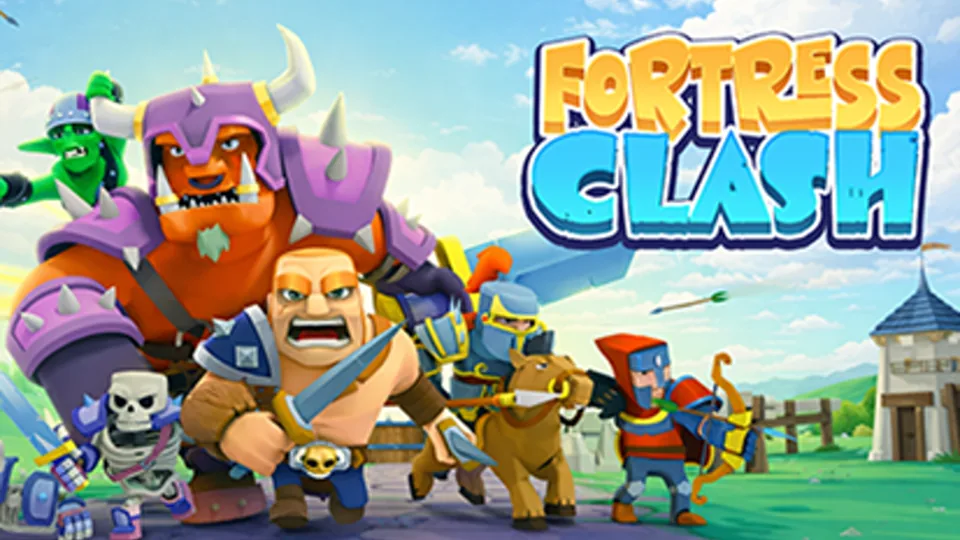
Fortress Clash is a tower-defense strategy game about rebuilding a stronghold, surviving long enemy-wave pressure, training soldiers, and reclaiming territory.
Rebuild the Stronghold First
Fortress Clash is a strategy tower-defense game built around a damaged fantasy stronghold, enemy waves, soldier recruitment, building upgrades, and territorial conquest. The premise is not a finished empire defending a polished capital. It is a weak base trying to become a real fortress before hostile factions overwhelm it.
That starting point defines the whole game. Every early purchase has to answer a survival question: wall health, tower damage, soldier support, income, or expansion safety. Fortress Clash is not only about defense or conquest. It asks the player to move between both without neglecting either.
The control model is intentionally simple: mouse movement guides focus, while left click selects units, builds, upgrades, and deploys. The challenge is deciding what your resources should become before the next attack arrives.
That makes Fortress Clash closer to a campaign manager than a pure lane-defense puzzle. The wall is not just a health bar. It is the timer that lets towers, soldiers, and general skills do useful work. Gold is not just a reward number. It is the rate at which the fortress can correct weaknesses. Territory is not just a trophy. It is a promise of future income that can become a liability if the base is still too thin.
Defense, Economy, Army, Territory
The core loop is defend, earn, upgrade, recruit, expand, and defend again. Early waves teach the basic relationship between systems. Walls buy time. Towers and soldiers convert time into damage. Town-style income buildings or gold production make future purchases easier. Territory creates a broader resource base, but it can also pull attention away from the base if taken too early.
A strong build order starts with stability. Reinforce the wall, add tower damage, train basic troops, and improve income before upgrades become too expensive. Only after that foundation exists should expansion become the main priority. Wall durability, watchtower pressure, and a small standing force matter more than grabbing the first available territory.
The campaign scale is larger than a single battle suggests: over 1,500 defensive waves, more than 100 territories to conquer, over 30 troop types, and more than 1,000 building upgrade options. A purchase is not only for the current wave; it affects whether the next ten upgrades arrive smoothly or painfully.
Because the numbers are so large, the right mental model is bottleneck removal. If enemies reach the gate too quickly, buy time. If they live too long, add damage. If every option is unaffordable, build the economy. If new land causes stress, slow down conquest. Fortress Clash becomes much easier once each purchase is tied to the failure it is meant to remove.
Troop Roles and Building Roles
Fortress Clash works best when units and buildings have clear jobs. Swordsmen can serve as front-line bodies. Spearmen are useful when enemy cavalry or charging units become a problem. Javelin throwers provide ranged support from safer positions. Cavalry gives speed and flanking pressure when the army needs to push outward. Generals add active battle skills that can swing difficult fights through damage boosts, defensive support, or healing.
Buildings create the permanent spine of the fortress. Walls absorb punishment, towers provide automatic pressure, and gold-producing buildings keep the economy moving. Other upgrade paths turn a fragile base into a layered stronghold, but only if the player avoids overinvesting in one layer while ignoring the others.
This balance matters because enemy races behave differently. Goblins, skeletons, and other factions can pressure the fortress through speed, numbers, durability, or mixed formations. Thick walls still fail if enemies live too long. Good damage still fails if the wall collapses before soldiers respond. Economy can snowball later, but it dies early if defensive minimums are ignored.
Troop presence should also be continuous. A wave does not care that you were saving for a perfect purchase; empty lanes still pressure the wall. Keep reserve forces ready, replace losses, and avoid leaving the field bare while waiting for one expensive upgrade.
The best armies are not simply large. They are mixed. Melee buys contact time, ranged units punish enemies while safer, cavalry answers speed and outer pressure, and generals stabilize dangerous moments. Upgrading one favorite troop can carry early fights, but the campaign eventually asks broader questions. A flexible army survives enemy variety better than a narrow army with one impressive number.
Expansion Timing Decides the Campaign
Territory conquest is tempting because new land means more resources and more momentum. That temptation is also where many Fortress Clash runs become unstable. A base that barely survived the last wave is not ready for a wider war. Expansion should happen when the fortress can absorb pressure, the army has enough strength to push, and the economy can recover after the purchase.
The useful question is not "can I take this land?" The useful question is "can I take this land and still survive the next wave?" If the answer is uncertain, strengthen towers, improve walls, train balanced troops, or increase income first. A conquered territory is valuable only if it becomes part of a stronger system.
Once the base is stable, expansion changes the game from pure defense into empire building. New land brings more resources, bigger upgrades make stronger waves survivable, and stronger waves create more rewards. The loop works when conquest and defense reinforce each other instead of fighting for resources.
Reading Wave Failure Correctly
Every difficult wave is information. If enemies break through quickly, wall durability or front-line coverage is behind. If they survive too long while the wall slowly collapses, damage output is behind. If every meaningful upgrade feels too expensive, income is behind. If newly conquered territory creates immediate stress, expansion moved too fast. The game rewards diagnosis more than panic spending.
Avoid one-dimensional upgrades. A single impressive tower can hide a weak wall. A large troop count can hide poor income. Heavy economic investment can hide immediate danger. Fortress Clash is a system of bottlenecks, and the best purchase is often the one that removes the current bottleneck rather than the flashiest option in the menu.
Generals should be treated as timing tools, not background decoration. If a general skill can boost damage, strengthen defense, or heal troops, save it for the moment when the wave would otherwise turn. Using it too early wastes value; using it too late may mean the wall is already lost. Good skill timing can make a difficult stage feel fair.
Enemy observation is as important as upgrade math. Goblin-heavy waves punish slow reactions through speed and numbers. Skeleton-heavy pressure asks whether the fortress has sustained damage and enough bodies to keep the line from thinning out. Mixed waves expose whether towers, troops, and skills are working as a system.
After a failed wave, resist the urge to buy the most expensive option available. Replay the failure in terms of timing. Did contact happen too close to the wall? Did ranged units shoot too late? Did the general skill land after danger had passed? Those answers point to precise improvements.
Strong Start Strategy
Start with the fortress, not the map. Reinforce the basic wall, establish steady damage, and make sure the first soldiers can support weak points. Add income early enough that later upgrades do not stall, but do not let gold production replace survival. A balanced start is boring only until it prevents a collapse.
Upgrade basic troop categories evenly at first. Melee units, ranged support, and faster mobile units solve different problems. If one enemy race punishes your current formation, a wider army gives you options. Dumping every resource into a favorite unit can work for a few waves, then fail hard when the enemy pattern changes.
Do not leave the battlefield empty. Constant troop presence maintains pressure and prevents enemies from walking into undefended gaps. At the same time, do not spend so much on troops that buildings fall behind permanently. Soldiers are flexible; upgraded structures are compounding strength. The best strategy uses both.
Expand only after the defense has a margin. A wall that survives with one hit left is not stable. A tower line that needs perfect luck is not stable. An army that cannot cover a second threat is not stable. When the fortress can survive the next attack without spending every emergency resource, then nearby territory becomes a smart target.
Fortress Clash is satisfying because each small improvement makes the kingdom less fragile. A damaged base becomes a fortress, a militia becomes an army, and a defended city becomes an expanding map. The right strategy is steady: secure the wall, scale income, diversify troops, and conquer land when ready.
The bad strategy is simple: rush conquest, ignore the wall, buy one flashy unit, forget income, then wonder why the next wave feels unfair. The good strategy is stronger: build a margin, keep soldiers present, upgrade the recent failure, and conquer only when defense has slack.