
Duo Defense Online
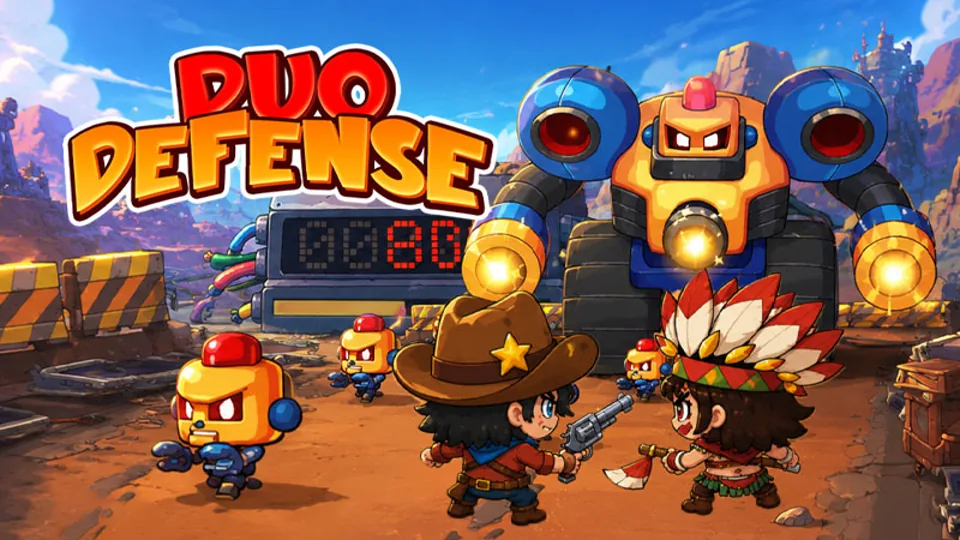
Duo Defense is a two-hero arcade defense game about timing punch returns, keeping a combat ball alive, crushing monster waves, and surviving rising pressure.
Two Heroes Under Constant Pressure
Duo Defense is a fast arcade action-defense game about two heroes protecting a platform from relentless monster waves. The control idea is simple on the surface: punch at the right moment, volley the bouncing combat ball between the two heroes, and use each clean return to smash the zombies and monsters pressing into the arena. The challenge comes from having to protect both sides at once while the pressure rises.
That makes Duo Defense more specific than a normal tower defense game. There is no long maze-building phase, no slow turret economy, and no quiet setup period before the danger begins. The game starts from attention. Watch the ball, read the incoming enemies, decide when the return has to happen, and keep both heroes alive through every battle.
Duo Defense was released on June 1, 2026 as an arcade action game with survival and strategy pressure. The structure around the core timing loop is larger than it first appears: campaign-style stages, boss battles, more than one hundred unlockable heroes, unlockable monsters and stages, five upgradeable power-ups, and global leaderboard comparison. The immediate moment is simple; the long-term chase is built around surviving longer and gaining more options.
Tap Timing Drives the Fight
The main control idea is easy to understand: attack when the ball reaches the hero. A mistimed tap breaks rhythm, while a late tap can let the hero fall and end the run. Because the heroes stand on opposite sides, the player has to scan instead of staring at one lane. A safe left side can become irrelevant if the right side is about to receive the next return.
Bad Duo Defense play looks like frantic tapping. Good Duo Defense play looks calmer. The player watches the ball first, then uses every return to preserve space around the heroes. Monsters matter individually, but the real danger is tempo overload: the ball speeds up, enemies become more aggressive, and a boss pattern can pull attention away from the next clean punch.
The first waves should be treated as rhythm calibration. Learn how quickly the ball travels. Learn the exact moment when the punch should connect. Learn how enemy density changes the amount of time you can spend checking the opposite hero. Once that rhythm is stable, the game becomes a split-attention test: protect the most urgent side while preparing the next action before the return window closes.
This risk-and-reward timing is the real hook. Hitting too early feels active but leaves the hero exposed. Waiting too long loses the return. A clean hit can crush a wave and extend the chain, but the chain only matters if the next hero is ready. Duo Defense keeps asking the player to stay calm while the screen suggests panic.
Campaign, Heroes, Bosses, and Power-Ups
Duo Defense uses progression to keep the reflex loop from feeling disposable. Campaign mode contains fifty levels, with tougher enemy encounters and boss battles along the way. That matters because the game is not only about one endless attempt. It is also about meeting more demanding wave patterns and learning when the same timing habit stops being enough.
Hero variety is another progression hook. Listings mention more than one hundred available heroes, each with a different look and sound identity. That kind of unlock system gives repeated runs a visible reward, even when the underlying demand remains timing and focus. New heroes do not erase the need for clean returns, but they keep the arena feeling fresh.
Several sources describe the unlocks as pairs of fighters rather than isolated characters, which fits the two-sided structure. That framing matters because Duo Defense is not about one overpowered champion carrying the fight. The whole identity is the exchange between both sides. A new pair changes the look and feel of the arena, but the player's real job remains protecting the return chain.
Power-ups are the real tactical layer. Five upgradeable power-ups are listed for difficult battles, and they should be treated as tempo tools. Use them when a wave becomes too crowded, when both sides are threatened at once, when a boss pattern pulls your attention away from the return window, or when a missed hit would end an otherwise strong run. Saving a power-up forever is not discipline; spending it at the exact moment it protects the chain is discipline.
Boss battles change the emotional pressure. Regular monsters teach pattern and speed. Bosses test whether the player can keep the same calm timing while the arena looks more dangerous. The best habit is to keep the threatened hero as the anchor. If both sides remain protected, enemy pressure is solvable. If one side is ignored for too long, every other plan becomes irrelevant.
Why It Is Not a Tower Defense Game
Duo Defense can look strategic because the word defense suggests towers, lanes, upgrades, and map planning. In practice, it is closer to a reaction arcade game with defensive stakes. The player is not asked to build a perfect layout. The player is asked to perform a perfect return under imperfect conditions.
That distinction matters for expectations. Duo Defense is not built around deep economy planning, long placement phases, maze optimization, or relaxed idle defense. It is built around short rounds, timing windows, escalating waves, unlocks, and quick failure feedback. It is a game of hands and eyes before it is a game of systems.
The two-hero setup gives the action its identity. One side may feel safe while the other side is about to lose control. A crowded center can pull attention away from the return point. A boss can make the player tap early because the arena looks urgent. Some listings describe the action as split-screen arcade chaos, which fits the way attention keeps snapping between left hero, right hero, ball path, and zombie pressure.
That also explains why the ball matters more than the monsters in many moments. Monsters create pressure, but the ball defines the actual input window. If the player watches only the horde, the punch comes early or late. If the player watches only the ball, a dangerous cluster may be ignored until it is too large. The useful mental model is layered attention: ball first, nearest hero second, enemy mass third, power-up decision fourth.
Practical Run Habits
Start by focusing on survival, not the score. The early goal is not a perfect leaderboard run; it is understanding the punch window. Tap when the ball reaches the hero. If you tap too early, you teach yourself panic. If you wait too long, the return breaks. Clean timing first, speed later.
Keep your eyes near the center, then shift to the side receiving the next ball. This lets you see both heroes and the monster pressure. Looking only at one side creates late reactions on the other side. Looking only at the largest enemy can make the return window vanish. The best visual habit is a small scanning loop: ball path, left hero, right hero, enemy density, ball path again.
Use power-ups before the arena becomes unreadable. A crowded wave is easier to stabilize early than rescue late. Boss phases deserve stored boosts because they add pressure and punish missed returns. If you consistently lose with unused power-ups, the problem is not scarcity; it is hesitation.
Treat unlocks as motivation, not a substitute for timing. New heroes, stages, monsters, and upgrades create variety, but the skill check remains clean attacks. A stronger-looking hero still fails if enemies are allowed to reach the platform. A better run comes from steadier tempo, earlier power-up decisions, and fewer attention slips.
After a loss, identify the real cause. Did you stare at one hero too long? Did you tap early when the arena looked crowded? Did you save a power-up past the danger point? Did one side collapse because you watched the horde instead of the ball? Duo Defense improves quickly when every restart has a single correction.
For longer runs, think in three separate clocks. The first clock is the ball's return rhythm. The second clock is the enemy wave, which grows faster and denser over time. The third clock is progression: coins, hero pairs, power-ups, stages, bosses, and leaderboard attempts. Players who separate those clocks make better decisions. They do not spend a power-up simply because enemies appear; they spend it when the enemy clock is about to break the ball clock.