


Dude Theft Auto Online
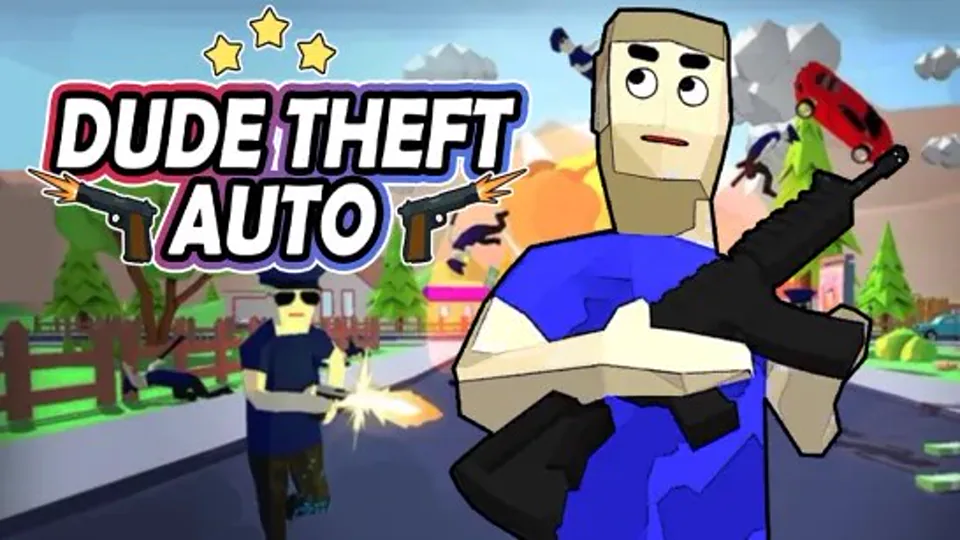
Dude Theft Auto is a low-poly open-world sandbox inspired by Poxel Studios' Dude Theft Wars formula: ragdoll physics, city driving, police chases, weapons, missions, multiplayer action, and chaotic freedom.
Comic City Sandbox
Dude Theft Auto is a low-poly city sandbox built around the same comic crime-spree fantasy that made Poxel Studios' Dude Theft Wars recognizable: roam a bright open world, grab vehicles, test weapons, annoy civilians, trigger police attention, and watch ragdoll physics turn a mistake into a stunt. It is not trying to be a serious urban drama. The city behaves like a toybox with rules: gentle exploration, reckless chaos, and police response all belong to the same system.
Dude Theft Wars established the wider formula as a physics-based action sandbox from Poxel Studios with offline play, online multiplayer, vehicles, weapons, wanted stars, ragdoll reactions, mini-games, and open-world exploration. Dude Theft Auto carries that formula into a lighter city-roaming format. The result is a game where one session can be about relaxed map discovery and the next can become a police chase, stunt run, shooting test, or vehicle experiment.
The tone matters because it changes how the systems should be read. A crash is not only failure; it is often the joke. A botched escape can be fun if it launches a character across the street. A quiet road can become a test track. A rooftop can become a launch point. The game borrows the ingredients of open-world crime games, then softens them with absurd physics, bright low-poly streets, simple objectives, and a willingness to let silly outcomes become the main reward.
That gives Dude Theft Auto a broad rhythm. Walk around first, learn the neighborhood, identify useful roads, find vehicles, notice where shops or activities sit, then start experimenting. The game feels best when you treat the city as a living system instead of a checklist. NPCs, traffic, police, money, weapons, vehicles, and ragdolls are all connected. Touch one system and another reacts. That is the real progression: learning what the city lets you get away with, and what it punishes.
Vehicles, Wanted Stars, and Ragdolls
Vehicles are the center of the sandbox because they change both travel and comedy. Cars give speed and simple escape options. Bikes make tight streets easier to thread. Heavier or stranger vehicles create bigger reactions when they hit obstacles. Official material around Dude Theft Wars calls out cars, bikes, tanks, helicopters, planes, fast taxi-style driving, stunt opportunities, and flying vehicles. Those details explain why transportation is more than movement. A vehicle is a tool for map control, crash physics, police evasion, and improvised challenges.
The wanted level is the clearest consequence system. Commit crimes, hit civilians, fire weapons, or cause enough trouble and police begin to respond. At low pressure, the chase teaches basic driving and escape routes. At higher pressure, the sandbox turns into an action sequence. The broader Dude Theft Wars design even describes five-star escalation where stronger forces and snipers can appear, and arrest can cost money. That structure gives chaos a price without killing the comic tone. Reckless play remains possible, but the city pushes back.
Ragdoll physics make those consequences readable and funny. A pedestrian hit, a mistimed jump, a bad landing, or a vehicle collision can create a memorable reaction. The physics are not polished realism. They are expressive feedback. They tell you that force, speed, height, and timing matter. A small crash might only knock someone down. A fast vehicle hit can send bodies flying. A poor aircraft landing can turn a controlled trip into a slapstick scene.
Weapons and tools add another layer. Guns, melee attacks, and throwable or special items shift the city from roaming to combat. They also raise the chance of police pressure, so the smartest play is not to buy everything at once. First learn movement, then learn vehicle handling, then buy equipment that supports the kind of chaos you actually enjoy. A player who likes chases should value mobility and route knowledge. A player who likes combat should value cover, aim, and escape planning. A player who likes stunts should look for ramps, rooftops, long roads, and aircraft.
Money ties these choices together. Cash can come from missions, activities, stunts, or other version-specific rewards. Spending it badly makes the sandbox smaller; spending it with intent makes the city open up. Keep enough money to recover from fines or mistakes, then invest in gear that expands your favorite loop. Dude Theft Auto is simple, but it rewards that kind of practical planning.
Offline Roaming and Online Fighting
Dude Theft Auto works in two moods. The first is offline roaming, where the city is mainly a playground for discovery, mini-games, vehicles, police escape scenarios, weapons, and self-made goals. The second is competitive action, influenced by the wider Dude Theft Wars multiplayer side. Free For All and Team Deathmatch modes, support for matches with up to 16 players, unlockable character items and weapons, and multiplayer maps such as NoobTown, JackStreet, and Parkour playground give that side a clearer shooter structure.
Those multiplayer details are useful because they clarify the game's split personality. The same title family supports relaxed absurdity and direct combat. In a sandbox session, a weapon might be a toy for testing reactions. In a deathmatch session, the same weapon becomes a tool for positioning, aim control, and survival. In city roaming, a rooftop is a sightseeing point or stunt spot. In competitive play, it becomes high ground. In offline mode, a vehicle is transport or comedy. In multiplayer, it can be speed, pressure, or a way to reach a better angle.
Mini-games keep the city from feeling empty between chases. Official store text and game descriptions mention activities such as police escape play, shooting, fast taxi driving, bowling, basketball, and other small challenges. These are not separate from the sandbox. They give temporary shape to the same movement and physics systems. Taxi driving tests roads and speed. Bowling and basketball lean into physics. Shooting tasks teach aim. Police escapes teach route awareness. Each small activity makes the city easier to understand without turning the city into a rigid mission list.
Because the game is loose by design, the best sessions start with one clear purpose. Pick a goal before you create noise. Explore a district. Find a reliable car. Earn money. Test a weapon. Practice a chase. Try an aircraft. Learn where a road opens into a wide escape lane. This prevents the sandbox from becoming random. The game is funniest when you know enough about the systems to create deliberate accidents.
First Session Priorities
Start on foot. Learn camera movement, turning, attack timing, interaction range, and how quickly the character accelerates or stops. Then enter a vehicle and practice basic driving on wide roads before attempting a chase. Character movement and vehicle movement have different failure points. On foot, bad aim or poor spacing gets you hit. In a vehicle, poor turning or bad route choice can trap you between traffic, buildings, and police.
Treat the first vehicle as training rather than a prize. Drive slowly through several streets, then speed up only after you know where intersections and open lanes are. If the version includes aircraft, do not treat takeoff as an escape button until you know how much space is required. Flying can make the city feel huge, but a bad landing can waste more time than a simple car route.
Raise wanted pressure after the nearby roads are readable. A small chase teaches where police come from, how they turn, and how quickly they close distance. A larger chase tests map knowledge. The trick is to cause trouble near familiar exits. Starting chaos in a dense area before learning exits usually leads to a short arrest, a fine, and no useful lesson.
Spend money after observing your own habits. If you keep returning to cars and chases, prioritize mobility. If you keep testing combat, buy weapons. If you enjoy exploration, keep a cash cushion and focus on access, recovery, and transport. The game has enough freedom that bad spending can hide the fun under avoidable friction.
Above all, let the city respond. Dude Theft Auto becomes stronger when you stop asking for one correct route and start building small experiments: Can this car clear that jump? Can I lose police through this alley? Can a rooftop give me enough time to escape? Can a heavy vehicle turn a normal street into a physics scene? That is the promise of the game. It gives you a comic open world, then lets cause and effect write the best moments.