
Craftnite Online
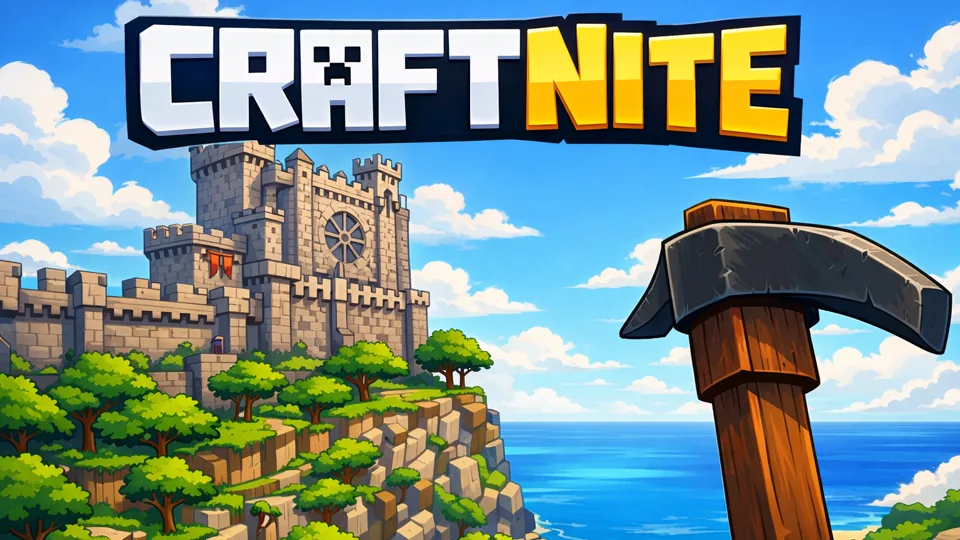
Craftnite is a .io FPS that mixes Minecraft-style terrain with Fortnite-style fights, stairs, dynamite, loot, and high-ground pressure.
Blocky Battle-Builder FPS
Craftnite is a blocky `.io` FPS that mixes Minecraft-style terrain manipulation with Fortnite-style combat pressure. It is not a peaceful crafting sandbox and it is not a pure aim duel. The central idea is to fight other players in a destructible, buildable arena where stairs, dynamite, trees, tunnels, loot, and high-ground angles can matter as much as the gun in your hand.
The goal is to eliminate opponents and fight for the top spot, but Craftnite becomes interesting because the ground is part of the weapon set. You can farm trees for stairs, dig into terrain, break crates, hunt for better weapons, collect ammo, and use explosives to remove cover. A player who only shoots is using half the game. A player who controls height, resources, and sightlines can survive fights that would be impossible on flat ground.
Craftnite's practical identity is a Minecraft and Fortnite blend. Minecraft influence appears through blocky terrain, mining, wood and stone resources, and player-made structures. Fortnite influence appears through fast player-versus-player pressure, stairs for vertical advantage, weapon pickups, dynamite, and the constant need to move before someone spots you. The game is credited to Christopher Lied and Pierre-Eli Normandeau, and its late-2019 shape fits the early `.io` battle-builder wave. The result is a compact shooter where building is tactical, not decorative.
Stairs, Dynamite, and Loot Flow
Craftnite usually starts with a limited loadout, so the first mistake is taking a fight before you have enough tools to finish it. Early movement should focus on three things: finding weapons, gathering resources, and learning where cover sits on the current map. You may have a sniper and pickaxe at spawn, but long-term survival depends on getting better gear, stairs, dynamite, and enough ammo to keep pressure during a fight.
The basic controls are direct. WASD moves, Space jumps, left click uses the selected item, and number keys switch items. That simple scheme hides a demanding rhythm. A fight can require a weapon swap, a stair placement, a jump, a shot, a retreat, and a dynamite throw within seconds. If item switching is slow, the player who reacts faster will take height, destroy cover, or escape before you finish aiming.
Stairs are one of the most important tools. They let you climb quickly, create new angles, escape a bad position, and make opponents look upward while you control the fight. High ground is powerful because it improves visibility and forces enemies to expose themselves. A player below you has to climb, shoot upward, break your structure, or throw explosives. Each of those responses takes time, and time is the whole point of building.
Dynamite is the opposite tool. Stairs create position; dynamite deletes it. It can punish players hiding behind dirt, destroy tunnels, break clustered cover, and force a camper to move. A good throw is not only about damage. It changes the map state. If an opponent has a safe angle, dynamite can make that angle unsafe. If someone hides inside a shelter, explosives can turn the shelter into a trap. If a player builds too predictably, a blast can remove the structure before the shooter has to peek.
Mining and digging create a slower but useful layer. The pickaxe is not only a backup weapon. It can open a tunnel, create a hiding place, break into a protected area, or let you escape a sightline when the open field is too dangerous. Trees can be farmed for stairs, and crates or map objects can supply weapons, ammo, and utility. The player who keeps resource flow going has more ways to survive the next fight.
Craftnite also rewards accuracy. Headshots can improve loot flow, and strong aim makes every tactical decision more punishing for opponents. But accuracy alone does not solve the whole game. Standing still in open ground is a bad trade even with good aim. The better habit is to shoot from cover, reposition after revealing yourself, and use the terrain so the opponent never gets a clean return shot for free.
Weapons have different roles. A sniper rewards distance and precision. Shotguns punish close range. Automatic weapons such as an AK-style rifle or Uzi-style weapon reward tracking and pressure. Pistols can fill gaps when better options are unavailable. Weapon quality can change how valuable a gun feels, so the same category may not always perform the same. The right weapon depends on distance, cover, ammo, and whether you can control the angle before the other player reacts.
Strategy and Resource Control
Craftnite fights are won before the first shot more often than new players expect. The strongest opener is not always sprinting toward noise. It is gathering enough resources to control the first real duel. Stairs without ammo are not enough. Ammo without cover is fragile. Dynamite without a follow-up shot may only delay the opponent. A strong inventory has answers: a ranged weapon, a way to climb, a way to break cover, and enough movement space to reset.
Flat ground is dangerous because it removes your options. If you are caught in the open, keep moving between trees, dirt mounds, buildings, and player-made stairs. Even small cover changes matter because they break an opponent’s aim and buy time for a weapon swap. When possible, move diagonally rather than straight backward. Straight retreats are easy to track, while diagonal movement forces the attacker to correct aim and chase through awkward terrain.
High ground should be used with discipline. Building upward is useful, but building too high can make you obvious and vulnerable to explosives. A small height advantage is often enough. One or two stair placements can change the fight without spending too many resources or turning you into the easiest target on the map. After taking height, do not stare from the same edge forever. Peek, shoot, move, and be ready for dynamite.
Tunnels are useful when a fight is unwinnable from above. Digging can break line of sight, give you a moment to reload, or let you appear from an unexpected angle. The danger is that a tunnel can become a trap if the exit is predictable or if dynamite lands inside. Treat tunnels as temporary routes, not permanent homes. Use them to reset, then re-enter the fight from a better direction.
Loot after eliminations is powerful but risky. When a player dies, their items can become the reason everyone nearby looks at the same spot. Before rushing the drop, scan the angle. If you can loot from cover, do it. If the drop sits in the open, build first or wait for another player to expose themselves. Many Craftnite deaths come from winning a duel, relaxing for half a second, and getting picked off while collecting the reward.
Competitive Sandbox Shooter Loop
Craftnite is a multiplayer shooter built around quick decisions and improvisation. The map is not fixed: every stair, tunnel, and explosion changes how the next fight plays. Strong runs are not only about sharp shooting. They come from building, mining, looting, and reading the moment when a fight should turn into a reposition.
Peaceful mining, long survival progression, crafting recipes, and solo base building sit outside the core loop. The blocky world may look like a sandbox, but the heart of the game is competitive pressure. Resources exist because they help win fights. Stairs exist because they change angles. Dynamite exists because opponents hide. The loop always returns to elimination and leaderboard position.
Craftnite's respawn-friendly structure makes mistakes readable. A bad fight can become a different opening route, weapon priority, or building habit on the next run. Every death usually has a visible cause: too exposed, too slow to switch items, not enough resources, bad angle, greedy loot, or weak movement after shooting.
First Fight Discipline
Start by learning item switching. Moving and aiming are obvious, but number-key confidence is what lets the game open up. Practice swapping between weapon, stairs, pickaxe, and dynamite until the change feels automatic. If you have to look down mentally every time, close fights will feel chaotic.
Farm before you fight. Trees can supply stairs, crates can supply weapons and ammo, and the map often gives enough cover to collect resources before challenging stronger players. A fight with no stairs and no dynamite is often a fair aim duel. A fight with height, cover, and explosives is a fight you have shaped in your favor.
Do not take fair fights on flat ground if you can build or reposition first. Even one stair stack changes sightlines, and one well-timed dynamite throw can turn someone else’s cover into a liability. Craftnite rewards the player who changes the fight before trying to win it.