

Cobb Can Move Online
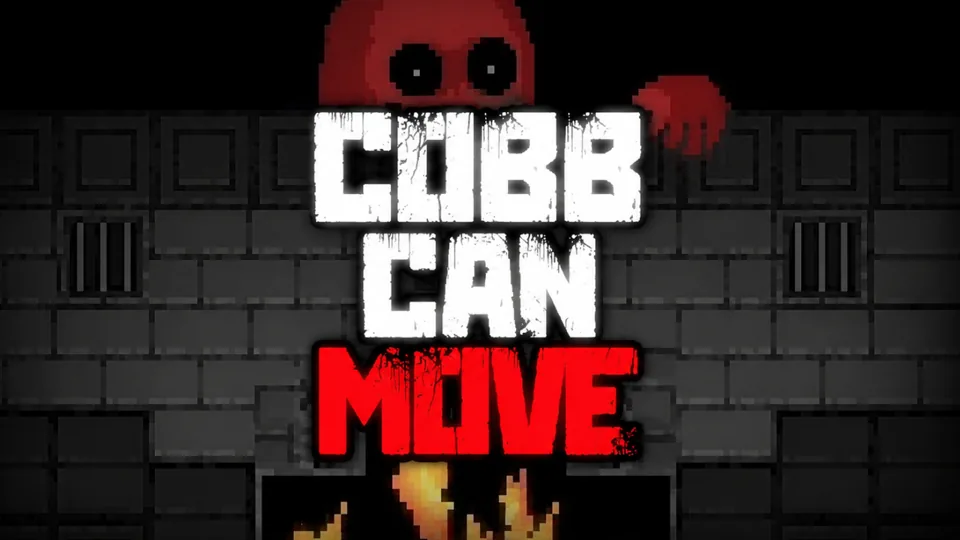
Cobb Can Move is a compact top-down survival horror game where Cobb's rule changes before each escape attempt.
A Horror Room That Keeps Changing Its Law
Cobb Can Move is a compact top-down survival horror game built around one cruel idea: the room may stay small, but the law of the room changes. The game does not need a large map, a weapon system, or a long story setup. It needs Cobb, a few objects, a route to complete, and one warning line that tells how danger works this time.
That warning line is the whole contract. Cobb can move. Cobb can see. Cobb can hear. Cobb can smell. Cobb can touch or reach. Cobb can duplicate. Sometimes the pressure comes from Cobb's new sense; sometimes it comes from a condition placed on the survivor, such as freezing, starvation, or a punishment for waiting too long. Each rule rewrites the same space. A route that was correct in one attempt can become lethal in the next because the monster now reads the room differently.
The design is closer to a survival board than an agility challenge. Movement is deliberate. Coal, furnaces, switches, doors, walls, and the exit form a sequence of commitments. Every commitment costs time, distance, sound, visibility, or safety. The horror comes from understanding the warning and still breaking it because the room feels unsafe. Cobb Can Move is fair in a harsh way: it explains the rule, then uses fear to make the rule harder to obey.
The strongest trick is that the room does not need to expand much for the threat to grow. Once Cobb gains another sense or ability, the same coal route becomes a different puzzle. A corner that blocks sight may not block smell. A slow wait that solved a patrol may fail when freezing or starvation is active. A furnace stop that looked safe may become unsafe if Cobb's reach changes the distance rule. The game gets depth from rewriting assumptions, not from adding a giant maze.
Coal Routes, Furnace Stops, and Exit Discipline
Most levels begin with a visible goal chain: gather coal, feed a furnace, flip what needs to be flipped, and leave. These actions are intentionally ordinary. The object tasks are not the hard part. The hard part is performing them while obeying Cobb's current hunting logic.
Coal creates the first layer of routing. You cannot simply head for the exit if the furnace is cold, and you cannot feed the furnace if reaching coal exposes you to the active rule. Before moving, identify the coal location, Cobb's starting position, the nearest wall breaks, the furnace path, and the exit path. That first scan saves more runs than quick reactions.
Furnaces and switches create the second layer. They force you to stop near an object, which is dangerous when Cobb has a rule that punishes hesitation, sound, line of sight, or short distance. A furnace beside a corridor may be safe when Cobb only moves slowly, but unsafe when Cobb can reach farther. A switch in the open may be harmless when sight is irrelevant, but fatal when Cobb sees across an exposed lane.
Coal delivery is especially tense because it combines carrying, stopping, and route memory. The best path is rarely the shortest path in a raw geometric sense. It is the path that keeps the active rule under control while still finishing the furnace job. If Cobb hears, the route should reduce unnecessary movement. If Cobb sees, the route should bend around cover. If Cobb smells, hiding behind a wall is not enough. If Cobb duplicates, the route should avoid the center where copies can narrow escape space.
Escape is the final discipline test. Many failed runs happen after the last objective because the player relaxes too early. The exit does not erase the rule. If Cobb can hear, the final sprint may still betray you. If Cobb can see, crossing the last open strip still matters. If Cobb can smell, hiding beside the doorway may not reset danger. The level ends only when you leave.
Sight, Sound, Smell, Reach, and Duplication
The named Cobb rules are valuable because they are short enough to remember, but broad enough to reshape movement.
When Cobb can move, assume the monster is not decoration. You need to watch its position after each commitment instead of planning the whole route in one mental line. A safe path can close because Cobb has advanced while you were busy with coal.
When Cobb can see, line of sight becomes the map. Corners matter more than distance. You should move from cover to cover, avoid long straight lanes, and treat open floor as a cost. If you must cross visibility, cross with a purpose and know where you are going before you step out.
When Cobb can hear, unnecessary movement becomes a liability. The best route may be shorter, quieter, and slower. Avoid fidgeting. Do not pace in place while deciding. Movement should complete a real objective: reaching coal, getting to a furnace, breaking line pressure, or moving toward the exit.
When Cobb can smell, simple hiding is less reliable. Distance and timing matter because the monster's awareness may not require vision. This rule is good at punishing players who learned to camp behind a wall on an earlier level.
When Cobb can reach, the danger radius changes. Standing "almost far enough" is no longer a plan. Give Cobb wider spacing around corners, objects, and exits. Any route that depends on brushing past the monster should be treated as failed before it starts.
When Cobb can duplicate, the room becomes a traffic problem. Do not react to each copy as a separate surprise. Group them mentally, keep the route simple, and avoid weaving through the center where copies can collapse from multiple angles.
When you can freeze or starve, the rule moves inside your own behavior. Waiting, hiding, or over-planning may become dangerous. These variants are especially strong because the usual horror instinct, stop and stay safe, can be exactly what loses the run.
Combinations are where the game becomes cruelest. Cobb seeing and reaching is different from Cobb only seeing. Cobb hearing while you can starve is different from Cobb only hearing. A duplicate rule can turn a route that was safe against one monster into a trap against several bodies. When two rules appear together, do not average them. Obey the stricter one first, then solve the second around it.
Surviving the Rule Instead of Fighting Cobb
Cobb Can Move is fair in a strict way. It tells you the rule, then expects you to honor it under pressure. The best habit is to read the opening instruction twice, then translate it into a route rule before taking the first step. Do not merely remember "Cobb can hear." Turn it into a command: avoid pointless movement, use the shortest purposeful route, and pause only where pausing does not invite contact.
After a death, do not restart instantly. Name the exact broken rule. "I crossed sight." "I waited while freezing was active." "I treated reach like normal distance." "I hid from smell as if it were vision." That sentence turns a failed attempt into useful information. Without it, the next run becomes panic repetition.
A strong run follows a simple rhythm:
The final lesson is that Cobb is usually not meant to be defeated. The task is survival under a changing rule set. Coal matters because it opens progress. Furnaces matter because they force stops. Switches matter because they redirect the route. The exit matters because it proves the rule was obeyed all the way through. Cobb Can Move stays tense despite its small scale because it does not hide the solution behind obscure mechanics. It puts the rule in front of you and trusts fear to make you careless. The winning mindset is calm obedience: every level is a new rulebook, and the old safe habit is usually the first thing that needs to die.
Key Highlights
- Read the active rule before touching movement.
- Locate coal, furnace, switch, Cobb, and exit.
- Choose the first objective, not the whole level.
- Move only when the movement changes your position advantage.
- Recheck Cobb after each object interaction.
- Preserve enough distance for the active sense or reach rule.
- Treat the final exit path as part of the same danger contract.