
Closed City Online
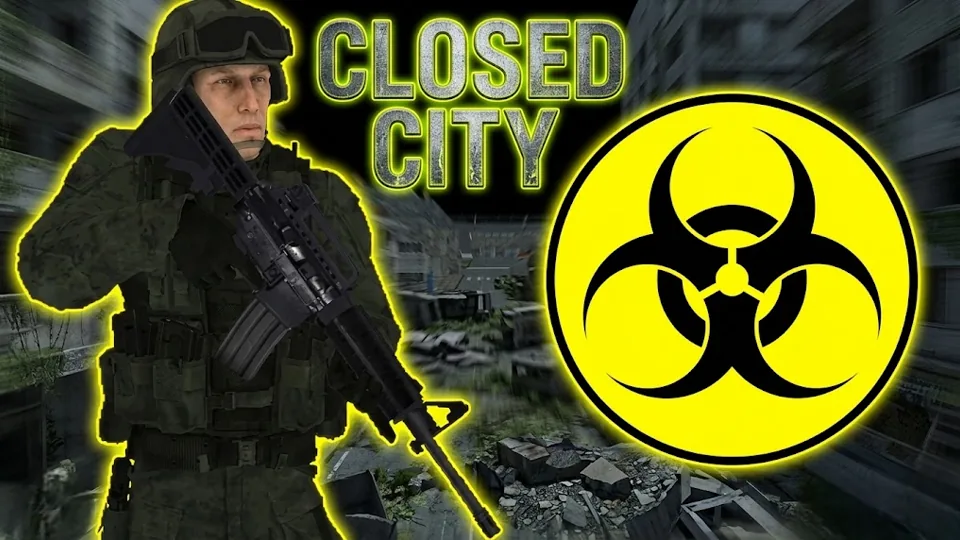
Closed City is a zombie survival FPS set inside a quarantined city where you scavenge weapons, manage ammo, use vehicles, and survive missions.
Quarantined City Survival
Closed City is a zombie survival FPS set inside a sealed urban zone where infection has already taken the streets. The setup is direct: the city is closed, supplies are scattered, zombies move through the ruins, and survival depends on turning every street, building, weapon pickup, and vehicle into a practical advantage. It is not a clean corridor shooter. The map is loose enough to support detours, scavenging, transport runs, bad retreats, and small mistakes that can grow into a lost weapon.
The strongest idea in Closed City is that the city itself becomes the main opponent. Zombies provide the immediate danger, but the real pressure comes from distance, ammo, reload timing, route choice, and the risk of being caught without a way out. A quiet street can become dangerous if a fight starts while your magazine is low. A building can be a supply stop or a trap. A vehicle can be transport or escape.
Missions give the action direction, but the survival layer is larger than objective chasing. The smart route may include a side alley for ammunition, an abandoned structure for medical supplies, or a retreat to find transport before crossing a larger section of the city. That design makes scavenging feel useful rather than decorative. A gun is not just a collectible. Ammunition is not just a number. A grenade is not just an attack. Each resource changes what kind of risk you can accept.
Closed City uses familiar first-person controls so the tactical decisions can stay in focus. WASD moves, the mouse handles aim and shooting, R reloads, Space jumps, G throws grenades, and F or E interacts with loot, weapons, shops, or transport. The End key can return you near the hospital after death, but that recovery has a cost: your current weapon can be lost. That single penalty gives each fight weight. Death does not merely interrupt the run. It can take away the tool that made your next route possible.
That makes the hospital more than a restart point. It reminds the player how expensive a bad route can become. A safe return with ammunition and a useful weapon is progress even if the mission is not finished yet. A death with the best gun equipped can turn the next attempt into a scavenging problem before the objective even starts.
Scavenge, Shoot, Move
The core rhythm is scavenge under pressure, fight only when needed, and keep enough distance to make the next decision. You move through streets and buildings, collect guns, ammo, grenades, and medical kits, then decide whether to push toward a mission or fall back to rebuild supplies. The city does not hand out infinite safety. A powerful weapon matters only while it has ammunition. A medical kit matters only if you survive long enough to use it. A vehicle matters only if you reach it before the street closes in.
Ammo discipline is the first skill. New survivors often fire too early, spend too many shots on distant zombies, or reload while enemies are already too close. Closed City rewards controlled rhythm. Let zombies enter useful range, fire with intent, move while shooting, and reload behind distance, cover, or a corner. The reload key is simple, but the timing is not. A panic reload in close range can ruin a route faster than a missed shot.
Grenades should be treated as emergency structure. A grenade thrown at one slow target is wasteful. A grenade thrown into a group blocking a doorway creates space, buys time, and opens movement. The same logic applies to every resource. Use tools to change the fight, not just to create noise. If a weapon cannot solve the current problem, save it for the moment when it can.
Vehicles change the scale of the map. On foot, every block has to be measured through ammo, health, enemy movement, line of sight, and retreat options. With transport, distance becomes manageable and a bad route can be corrected. A vehicle can help you cross to a mission, escape a crowd, search wider areas, or reset a fight before the hospital penalty becomes likely. In a quarantined city, mobility is not luxury. It is survival inventory.
The timing of transport matters. If you wait until zombies are already close, reaching a vehicle can become another exposed action. If you use a vehicle too early, you may pass supplies that would have made the next area safer. Treat transport as a route tool, not just a prize.
Weapon Loss and Route Pressure
The hospital respawn rule is what separates Closed City from disposable arcade shooting. Returning near the hospital keeps the run alive, but losing the equipped weapon means failure carries forward. If you die while carrying your best gun, the next attempt can start weaker. That changes the meaning of every push. A risky mission with low ammunition is not heroic if it costs your main weapon. A retreat with your gun still in hand is often the better result.
This creates a two-layer route system. The first layer is the visible goal: reach a mission, clear a street, find supplies, or move across the city. The second layer is the backup plan: where to retreat, where to reload, where a vehicle is parked, and where supplies might be recovered after a bad fight. Closed City becomes more satisfying when you plan both layers at once.
Buildings and side areas matter because they interrupt straight-line thinking. A player sprinting toward objectives may miss ammunition, medical kits, alternate exits, or safer angles. A slower route can actually be faster if it prevents weapon loss. This is the central survival tradeoff. Moving quickly saves time but increases surprise. Searching carefully takes longer but improves the next encounter. The best route is rarely the shortest route. It is the route that preserves enough health, ammo, and mobility to survive the next objective.
The zombies do not need complex behavior to be threatening. They become dangerous by appearing at the wrong time: when your weapon is empty, when a doorway is narrow, when you are recovering from a reload, when you have just spent a grenade, or when you are too far from a vehicle. Their strength is pressure. They make ordinary FPS habits feel costly.
That is why the safest route often has a rhythm: clear the nearest threat, check ammunition, reload, scan the next corner, then move. Sprinting between objectives can work while the street is empty, but a single surprise group can punish missing preparation. The city rewards players who think one block ahead.
Practical Survival Plan
Start by learning the interaction keys before rushing into heavy combat. Movement and shooting are familiar, but survival depends on grabbing supplies quickly, entering transport without hesitation, and reloading at the correct moment. A player who pauses over a pickup can turn a clean route into a close-range scramble. A player who forgets the vehicle key can lose the best escape option on the street.
For the first run, move slowly enough to learn how fast enemies close distance. Fire only when a zombie is an immediate problem, then reload while you still have space. Watch how long the reload takes. Notice which streets allow backpedaling and which ones funnel you into corners. The game becomes less punishing once you know how much room each action needs.
Search areas that appear optional. Side rooms, alleys, abandoned structures, and edges of the route can hide supplies that decide the next fight. A single magazine or medical pickup can make a mission push possible. The city is dangerous, but it also contains the tools needed to survive it. Treat every detour as a risk calculation: time and exposure now in exchange for better odds later.
Use vehicles early enough to matter. Waiting until a fight is already collapsing may leave no time to reach transport. If the route ahead looks crowded or supply levels are weak, reposition first. A survivor who leaves with a weapon and some ammo can recover. A survivor who dies trying to finish a messy fight may return near the hospital without the gun that made progress possible.
Closed City keeps its tension practical rather than elaborate. The pressure comes from immediate urban survival: check the street, loot the room, conserve bullets, use grenades only when they change the fight, reach transport before the crowd closes, and keep enough equipment for the next route.
A strong first-hour plan is to make the city smaller in your head. Learn the hospital area, identify a few supply spots, remember where vehicles tend to help, and mark which streets are bad for reloads. After that, mission routes stop feeling like random wandering. You begin building a mental map of safe corners, supply detours, vehicle exits, and places where a grenade is worth saving. Closed City becomes more interesting once the city is no longer just scenery, but a set of survival decisions you can improve.