



Chicken Jockey Combat Online
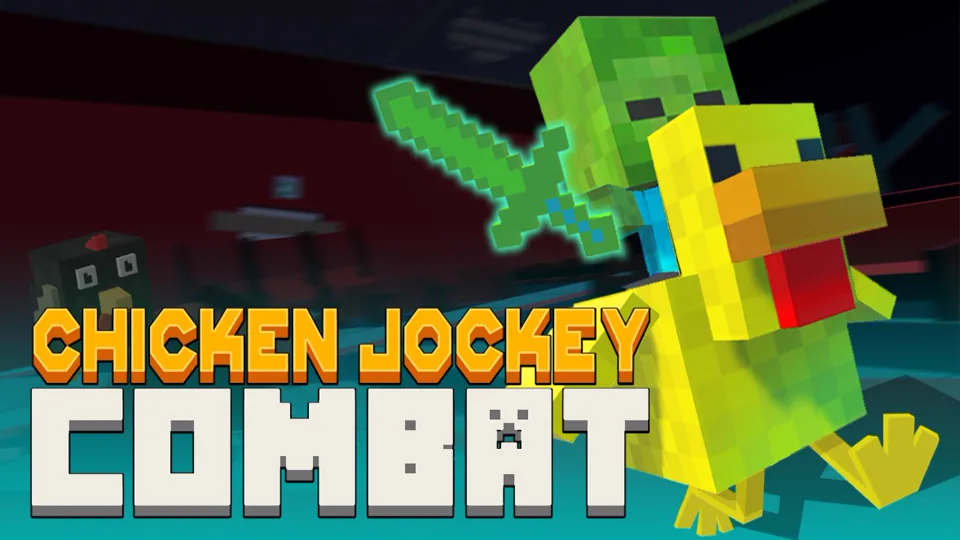
Chicken Jockey Combat is a voxel FPS where chicken-mounted movement, pickup weapons, aimed fire, reload timing, power-ups, and arena survival drive the chaos.
A Voxel FPS Built Around Awkward Speed
Chicken Jockey Combat is a voxel first-person shooter built around a deliberately absurd image: a blocky fighter riding a chicken through combat. The name comes from the familiar Minecraft chicken jockey joke, but the actual game is not a mining or crafting sandbox. It is a combat arena shooter where the mount changes how movement, aiming, reloads, and pickups feel.
The important setup is clear: colorful pixel or voxel graphics, FPS controls, chicken-mounted movement, waves or groups of enemies, weapon pickups, power-ups, and fast survival pressure. Some arenas lean into monsters or zombies; others feel closer to broader enemy waves. The shared loop is the same. You enter blocky arenas, keep moving on the mount, aim with the mouse, shoot, reload, collect better weapons, use cover and height, and avoid getting trapped when enemies push close.
The stronger descriptions of the game give it a more specific survival shape. The rider is not only clearing a shooting gallery. Zombies and stronger creatures push in from several directions, rewards can feed better equipment, and weapon pickups change how each wave should be handled. The practical goal is simple: survive the current attack, improve the kit, and keep the arena from closing around the mount.
The chicken is not only decoration. It makes the shooter feel less static. Chicken Jockey Combat rewards motion because the mount gives the player a slippery, comic form of mobility. You survive by turning that speed into space: circle enemies, break line of sight, jump over obstacles, reload behind cover, and re-enter from a cleaner angle.
Controls, Weapons, and Mounted Positioning
The control scheme makes the strange premise readable. WASD or arrow keys move. The mouse aims and scans. Left click fires. Right click can aim more carefully when aiming down sights exists. Space jumps. R reloads. Shift sprints. This is not a clicker, runner, or builder, but a blocky FPS with extra movement instability from the mount.
The core rhythm should be scan, move, shoot, reload, reposition, collect, and repeat. Standing still is usually a mistake because enemies can surround the mount or punish a reload. Sprinting nonstop is also a mistake because speed without a route leads into corners. The useful movement pattern is wide and curved. Keep enough distance to aim, but keep enough cover nearby to reload safely.
Weapon variety gives each arena more texture. Simple firearms, stronger guns, sci-fi options, lasers, bazookas, explosive tools, and pickups scattered through the map all push the rider to keep moving. The exact arsenal can vary, but weapon roles are easy to understand. Rifles and pistols want clean sightlines. Explosive weapons want spacing so splash damage or slow handling does not punish the rider. Fast-fire weapons help when enemies press close. Strong pickups are worth taking only when the route out is safe.
The upgrade layer changes how a good run should be judged. A weapon that feels weak during the first wave may still be useful if it earns enough reward for a better option after the fight. A powerful gun is wasted if it empties before the dense part of a wave. Use basic fire for isolated zombies, save heavier shots for clusters or bosses, then spend rewards on the role that solves the next problem.
Map reading is the second half of survival. Blocky arenas create ledges, walls, ramps, corners, power-up pockets, and occasional helpful areas. Height can create a better angle. Walls can buy reload time. Corners can save a run if they have an exit, or end a run if they become a dead end. Chicken Jockey Combat rewards players who see the arena as a circuit rather than a flat shooting range.
Hidden or side areas deserve attention, but they are not worth blind rushing. A pocket with ammunition or a rare weapon is strongest after the nearby lane has been cleared. The best search pattern is short and repeatable: clear a pocket, check it, reload, return to the main circuit, and avoid turning a reward room into a trap.
Useful habits:
Key Highlights
- Reload before crossing open ground.
- Use aimed fire for distance, but switch to faster hip fire when enemies close in.
- Sprint to escape or rotate, not to charge into every fight.
- Jump over terrain when it preserves momentum, then land facing a route out.
- Take weapon pickups after creating space, not while surrounded.
- Visit secret rooms after thinning the wave, not at the first sign of loot.
- Spend shop rewards on the enemy type that is currently ending your runs.
- Fight from angles where the chicken can keep moving.
- Treat cover as a reload tool, not a hiding place.
Why the Joke Works as a Shooter
The title is funny because a chicken-mounted fighter should not feel serious. The game works because the joke creates a real mechanical difference. The mount makes movement harder to ignore. It asks the player to control speed while aiming, which changes even familiar FPS decisions. A reload in the open feels worse because the rider has momentum. A pickup in the center of the arena feels tempting but dangerous. A high ledge feels useful only if the mount can leave it quickly.
This makes Chicken Jockey Combat closer to arcade survival shooters than to Minecraft Classic or peaceful voxel building games. The blocky style gives it readable shapes and a Minecraft-like visual language, but the goal is not to mine ore or place blocks. The goal is to survive pressure, use weapons well, and turn chaotic movement into advantage.
Enemy pressure matters because the mount is strongest while moving and weakest when boxed in. If enemies approach from multiple directions, shoot just enough to open a lane, then rotate. If a stronger enemy appears, use distance and weapon choice instead of sprinting straight at it. If the map offers power-ups or secret pockets, reach them through a cleared path. A powerful weapon collected at the wrong time can still get the rider eliminated if the route collapses.
Boss-style enemies make that principle sharper. A boss usually asks for patience rather than panic firing. Keep one escape lane open, reload before committing to a long burst, and do not let smaller zombies herd the mount into the boss angle. If the boss has a distinct attack rhythm, spend the first seconds watching its timing. The chicken's speed is useful only when the player has chosen where that speed is going.
The game is quick FPS pressure inside blocky arenas, with a silly theme wrapped around real mechanics. Base building, crafting, and slow exploration are outside the loop. The arena is not a home to decorate. It is a space to read, circle, and survive.
First Runs Without Wasting the Mount
The first run should be a handling test. Confirm mouse sensitivity, left-click fire, right-click aiming, reload, sprint, and jump before judging performance. Spend the opening moments moving in arcs around the arena rather than running straight forward. The goal is to learn how quickly the mount turns, how long reloads feel, and which parts of the map provide real cover.
After handling feels stable, start pairing movement with shots. Fire from medium range, move before enemies close, reload behind a wall, then re-enter from a different angle. Do not chase every pickup immediately. A pickup is valuable only if it leads to a stronger next fight. If collecting it traps the mount in the center of the map, it is bait.
Use weapon roles deliberately. A precise gun is strongest when you have a corridor or height advantage. A rapid weapon helps when the arena compresses. An explosive tool should be fired from enough distance to avoid self-punishment and to catch clustered enemies. If a stage includes tougher waves, save the best pickup for the moment when enemies become dense instead of spending it on isolated targets.
After the first few waves, start thinking in cycles. The combat cycle clears space. The reward cycle improves the weapon role that matters. The exploration cycle checks safe corners for ammo or weapons. Losing usually happens when those cycles are mixed in the wrong order: shopping without knowing the threat, searching before the lane is clear, or firing every strong weapon too early.
For a stable run, build a route with three anchors: a reload wall, a pickup route, and a high or open lane where the rider can see enemies early. Rotate through those anchors instead of improvising every second. The game looks ridiculous, but route discipline makes the chicken mount controllable.
Chicken Jockey Combat is not trying to be realistic. It makes FPS habits feel strange again by putting the player on a ridiculous, fast mount. Once that is understood, the game becomes cleaner: keep moving, reload with cover, collect weapons only with an exit plan, and make enemies chase your route.