Brainrot Park Online
Brainrot Park is a 3D idle-tycoon merge game where Brainrot creatures hatch from Lucky Blocks, generate coins, merge into higher tiers, and expand your park.
A Meme Zoo Built From Coin Flow
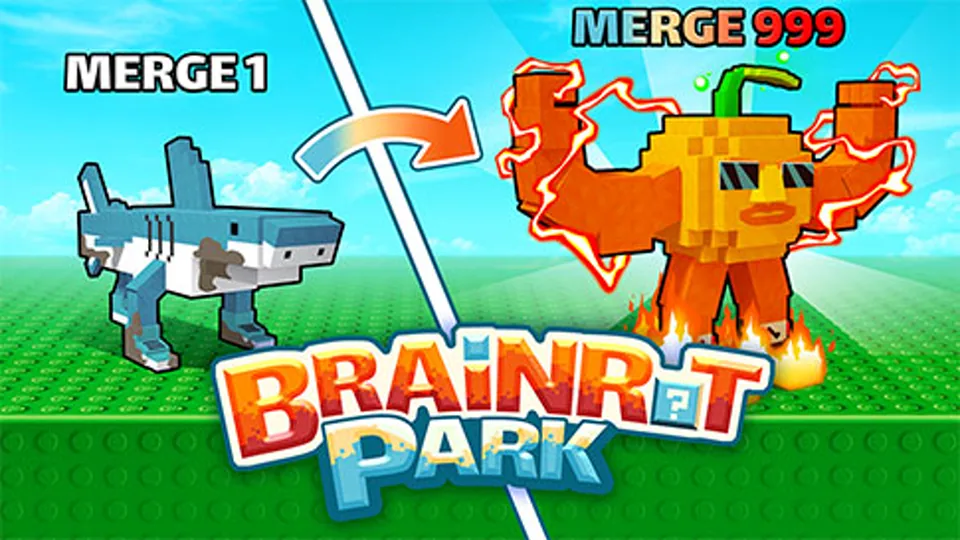
Brainrot Park is a 3D idle-tycoon merge game where strange meme creatures become the working machinery of a small park. The creatures are called Brainrots, but the real structure is not random comedy. It is an incremental economy: buy Lucky Blocks, hatch creatures, place them into active spaces, let them generate coins, merge duplicates into stronger variants, sell weak extras, and spend the money on better blocks, larger capacity, and faster growth.
That loop gives the game two identities at once. It looks like a silly collectible zoo, but it behaves like a production layout. Every Brainrot in a useful slot is a worker. Every duplicate is either a merge opportunity or clutter. Every coin spent on a block is a bet that the next hatch will improve income, complete a pair, or unlock a higher rarity. A park full of low-value creatures may look busy while actually slowing the economy, because open space is needed for hatching, sorting, and upgrading.
The park begins small on purpose. Limited space turns simple collection into management. A new Brainrot can help the coin flow, but it can also block better decisions if it sits in a valuable slot too long. Early progress comes from keeping enough earners active to fund more Lucky Blocks. Midgame progress comes from recognizing which creatures should be merged, sold, or held until another copy appears. Late growth depends on converting randomness into a cleaner engine: stronger variants, better income rates, less dead space, and fewer low-tier leftovers.
Lucky Blocks, Hatching, and Active Tempo
Lucky Blocks are the entry point for almost every decision. Buy them from the conveyor, move them into a hatching area, then wait for the result or speed the process with active clicking. This split between waiting and acting is important. Brainrot Park can produce coins in the background, but the fastest progress happens when hatching, placing, merging, selling, and upgrading are all handled in one smooth cycle.
The control set supports that loop. WASD or the arrow keys move through the park. E handles the main interaction near blocks, creatures, placements, and upgrades. G opens the selling flow. Number keys switch inventory items. Left mouse clicks can reduce Lucky Block hatch time. None of these inputs are complicated alone, but together they determine how cleanly the economy moves. A slow interaction rhythm creates idle downtime; a clean rhythm turns every block into another chance at income or rarity progress.
Hatching should not be treated as a reward animation only. Each result needs a quick classification. A new creature may belong in an active slot because it adds income. A duplicate may be more valuable as merge material. A weak hatch may be temporary income until stronger forms appear. A rare hatch may deserve protected space because its coin rate changes the next few purchases. This is where Brainrot Park becomes more than a simple tap-and-wait game. The important action is deciding what the hatch means for the park's current bottleneck.
Better Lucky Blocks matter because rarity changes the whole curve. Basic blocks are useful for density and early duplicates. Higher-value blocks can introduce stronger Brainrots that produce more coins and make future upgrades easier. The decision is not simply "buy the most expensive option." If slots are full, capacity may matter first. If income is slow, stronger creatures or better blocks may be correct. If duplicates are waiting, a merge may improve the park without another purchase.
Merge Timing and Slot Discipline
Merging is the cleanest way to turn clutter into progress. Two identical Brainrots can become a higher-tier form, often improving coin production while reducing slot pressure. That makes merging both an upgrade mechanic and a space-management tool. The timing matters. Waiting too long fills the park with weak duplicates. Merging without checking income can briefly reduce the number of active earners. Selling too aggressively can erase a future pair.
The best slot discipline is simple: every occupied space should have a job. A creature should be producing useful coins, waiting as a realistic merge candidate, or holding rare value that cannot be replaced easily. Anything outside those jobs becomes clutter. This rule keeps the park from turning into a messy collection screen and makes it easier to decide what to do after each hatch.
The Sell Shop is part of that discipline. Selling does not mean the hatch was useless. It means the creature has finished its role. Low-tier extras can help in the first few minutes, then become dead weight once better earners appear. Turning them into currency can fund a stronger Lucky Block, a needed upgrade, or more attempts at a rare variant. The mistake is selling automatically without thinking about merge chains. The better habit is to check whether a creature is part of a near-term pair before removing it.
Rare Brainrots deserve a different evaluation. A rare form may not immediately complete a merge, but its income rate can justify space. Some rare creatures also function as collection milestones, giving the park a clearer long-term direction. The display value of a rare Brainrot is secondary to the economic value. A rare creature that raises coin flow changes the entire pace of future hatches.
Upgrades, Tasks, and Idle Momentum
Upgrades should solve the park's current slowdown. If the slowdown is space, expand capacity. If the slowdown is income, improve the earning base through stronger creatures or better blocks. If the slowdown is hatching, use active clicks and prioritize systems that increase creature processing speed. If the slowdown is sorting, sell weak extras and merge duplicates before buying another batch of blocks.
Tasks and collection goals give the idle structure direction. They encourage hatching more blocks, discovering new Brainrots, producing coins, and keeping the park active instead of waiting passively. A task that asks for more creatures is not just a checklist. It creates a reason to keep buying blocks even after the first income base is stable. A task tied to upgrades pushes the economy toward reinvestment instead of hoarding coins.
Offline or passive income changes how the game should be read. The park can continue to feel productive between active decisions, but idle income is strongest when the active layout is clean before stepping away. A park filled with poor earners will still produce, but it will produce slowly. A park with merged high-value creatures and open space prepared for the next session returns with better momentum.
There is no combat route, platform route, or puzzle route hiding under Brainrot Park. The central problem is economic hygiene. Buy only when the next block can be processed. Merge when the pair improves income or frees space. Sell when a creature no longer has a job. Upgrade when the purchase removes a bottleneck. Repeat that cycle and the strange zoo becomes a compact coin machine.
A Clean First Park Route
A strong opening starts with enough basic Lucky Blocks to create a starter income base. Place the first creatures, let coins begin flowing, then watch for duplicate pairs. Do not fill every slot just because a creature exists. Early fullness feels productive but can block the next useful hatch. Keep at least some room for sorting.
Once the first income base is stable, the next target is controlled upgrading. If better blocks become affordable, buy them when the park can process the results. If slots are crowded, expand or sell before buying. If hatches are slow during active play, click blocks to reduce timers and keep the line moving. The goal is not constant spending; it is constant conversion from money into better money-making structure.
The simplest evaluation after every hatch is three questions. Does this Brainrot earn enough to stay active? Does it complete or nearly complete a merge? Can selling it fund something better? If none of those answers is useful, the creature should not control the park's future. That is the difference between a random creature pile and an idle tycoon layout.
Brainrot Park works because the joke creatures are wrapped around real incremental discipline. Lucky Blocks create uncertainty. Merges create direction. Slots create pressure. Coins create compounding. Upgrades create acceleration. The theme makes the park noisy and strange, but the underlying game is clean: keep the strongest Brainrots working, keep the weak ones moving out, and keep every coin pointed toward a faster next cycle.