



Bow Battle Online
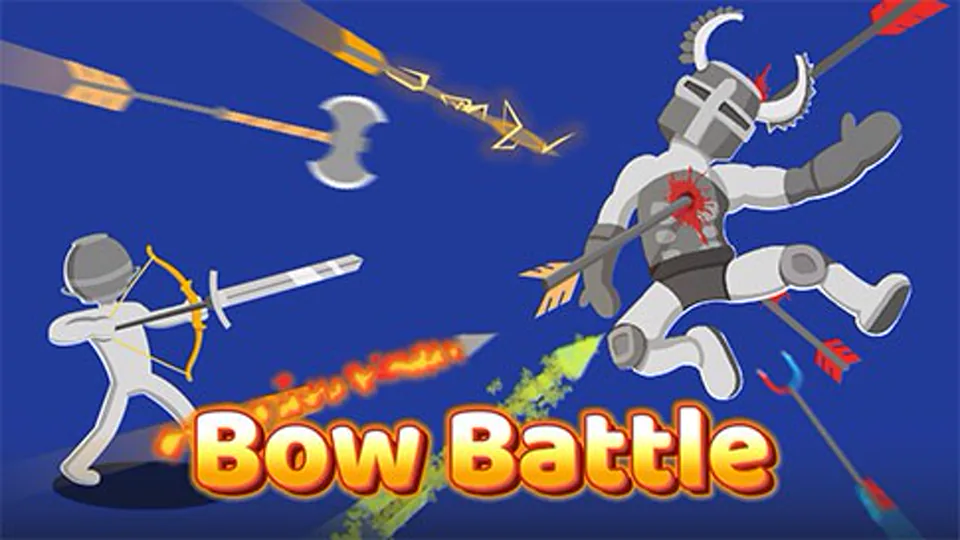
Bow Battle is a physics-driven stickman archery survival game where each shot, jump, apple pickup, and arrow upgrade can save or end the run.
Ragdoll Archery Pressure
Bow Battle is a stickman archery survival game built around ragdoll physics, curved shots, stamina pressure, and small resource decisions that matter more than they first appear. It is not a calm target range where the only job is to click the center of a board. The game puts you in a compact combat arena, gives your fighter a bow, then sends enemy archers into positions that force you to judge angle, draw timing, jump timing, and recovery opportunities at the same time.
The core appeal is that every arrow has weight. A shot can miss because the angle is wrong, because the enemy moved, because the ragdoll body folded in an unexpected way, or because you released too early while trying to dodge. That makes Bow Battle more tactile than many archery games. You are not only aiming at an enemy; you are managing an unstable little duel where gravity, knockback, incoming arrows, and stamina all share the same screen.
Bow Battle combines physics-based archery, stickman combat, enemy waves, special arrows, apples, upgrades, and Challenge Mode into a compact survival run. Skull rewards, stamina, armor, damage upgrades, and arrow variants such as fire, ice, electric, poison, axe, mace, and other control-style shots give the game a clearer identity than the title alone suggests: precision and upgrade planning have to work together.
Apples, Skulls, and Arrow Types
The basic control scheme is intentionally small. Hold the left mouse button to draw and aim, then release to fire. Press Space to jump away from enemy shots. Those two inputs carry most of the game, but they create a lot of decisions because shooting, jumping, and waiting are tied to survival. If you fire without thinking, you may waste the only clean shot before an enemy arrow lands. If you jump every time danger appears, you can burn stamina and lose the ability to escape the next hit. If you stand still for too long to recover, you may give the next archer an easy line.
Each run asks you to repeat a tight loop: read the enemy position, choose a shot angle, release at the right strength, dodge the return fire, then use the reward or pickup that appears before the next wave becomes worse. Red apples restore health, green apples restore stamina, and golden apples are more valuable because they help both sides of the survival equation. These pickups are not decoration. They often decide whether a wounded run can continue long enough to reach the next upgrade.
Defeated enemies can reward skulls, and skulls feed the progression layer. Instead of relying on raw aim forever, you can improve areas such as health, armor, stamina, damage, accuracy, arrow slots, or weapon performance depending on the version and mode being played. The important thing is to treat upgrades as answers to your current weakness. If you keep dying after one mistake, durability matters. If you run out of movement options, stamina has more value than another damage boost. If armored enemies or giants start surviving too many clean hits, special arrows and heavier damage become the better investment.
Bow Battle also becomes more interesting once special arrows enter the run. Fire, ice, electric, poison, axe, mace, and other utility shots change how you solve the arena. Even when the exact unlock order varies by build, the strategic idea stays the same: special arrows are not just stronger normal shots. Fire or poison style effects can help finish enemies without a perfect follow-up. Ice or control-style arrows can buy time. Heavy arrows are useful when a large enemy needs impact instead of finesse. The player who experiments with the loadout usually understands the game faster than the player who treats every arrow as a normal projectile.
Arrow Arcs, Apples, and Upgrade Pressure
Bow Battle sits between Ragdoll Archers, stickman combat, and a traditional bow-and-arrow duel. It has the readability of a simple action game, the wobble and surprise of ragdoll physics, and the replay value of a survival challenge where apples, enemy waves, upgrades, and unique arrow types keep changing the value of each decision.
Bow Battle is strongest when the projectile arc matters. A direct hit feels earned because both the angle and the release had to line up. A near miss is still useful feedback because the cause is visible: power, height, movement, or impatience. Short runs make correction immediate. A failed attempt can restart into a better opening habit: aim higher, jump later, shoot apples sooner, or spend skulls differently.
Slow sandbox building, crafting loops, and upgrade systems that erase reflex pressure are outside Bow Battle's structure. The progression helps, but it does not automate the duel. Enemy archers still punish lazy timing, and ragdoll movement can turn a comfortable angle into a risky shot. That is the point. The game keeps the player inside the combat rhythm instead of letting the upgrade system flatten the challenge.
Challenge Mode changes the pressure by making rewards more random and floor-like, pushing the game toward a light roguelike structure. A stage reward may improve a stat, change the weapon plan, or create a run-defining bonus. Because the path is less predictable, the best plan is not to memorize one upgrade order. It is to recognize what the current run gives you and change the archery style around it.
Surviving the First Waves
Start by learning the arc before chasing speed. Hold the mouse, aim a little above the target, release, then watch where the arrow actually lands. After a few shots, you will understand how much height the game expects at short, medium, and long distances. That early calibration matters because Bow Battle punishes overcorrection. A panicked high shot can waste time, while a flat shot may hit the ground or a harmless body part instead of the head.
Do not jump just because an enemy moved. Space is strongest when it dodges a real arrow or changes your body position before a dangerous shot lands. If you spend every moment hopping, you lose stamina and make your own aim worse. A cleaner rhythm is draw, release, read the enemy shot, jump only when the line is threatening, then pause long enough to recover when the arena gives you a safe second.
Shoot apples deliberately. Health and stamina pickups can be more important than an immediate enemy hit, especially when the next wave is already on screen. Red apples keep a damaged run alive, green apples restore the movement and shooting budget, and golden apples can reset the fight when both meters are strained. New players often ignore pickups because enemies feel urgent. Better players use pickups to make the next enemy less urgent.
Spend upgrades on the problem that actually ended your last run. If you were hit once and folded, health or armor is the simple answer. If you had clear shots but not enough power, improve damage or arrow quality. If you kept getting trapped after jumping, stamina is the better first fix. If giants or armored enemies start appearing, test special arrows instead of forcing normal shots into bad trades. Bow Battle rewards that practical approach: identify the failure, buy the direct counter, then return to the arena with one less weakness.
Finally, play the early waves as practice, not as filler. The first enemies teach the spacing, apple timing, and arrow rhythm that later waves assume you already understand. A clean early game means you enter harder fights with more health, more stamina, and more upgrade momentum. In a physics archery game, that kind of control is the real advantage.
Special arrows should be treated as tools, not decorations. A fire or poison shot can finish a damaged enemy without another perfect hit. An ice or electric shot can buy time when stamina is low. A heavy axe or mace-style projectile can solve enemies that survive normal arrows too easily. The best arrow is the one that fixes the current fight. Saving rare ammunition forever is a mistake if the run ends before the advantage is used.
The leaderboard and survival structure make consistency matter. One spectacular headshot does not help if the next three shots waste stamina, miss apples, and leave the archer exposed. A strong run is built from repeatable habits: draw with enough height, release before panic, jump only through real danger, collect the right apple at the right time, and spend skulls on the weakness that actually ended the previous attempt.