
Blockpost Online
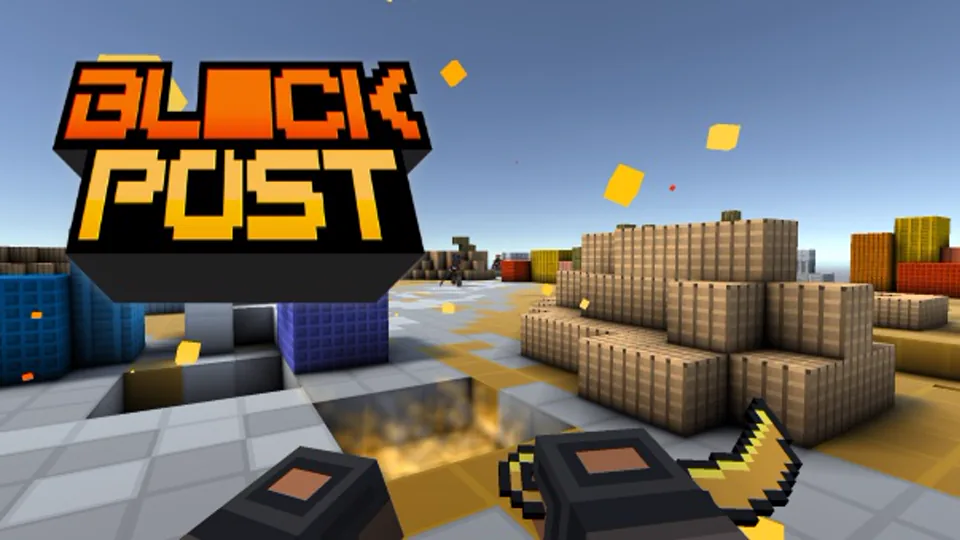
Blockpost is a real-time voxel FPS with multiplayer combat, breakable block maps, many weapons, multiple modes, and fast tactical rounds.
Tactical Cubic Shooter
Blockpost is a real-time voxel first-person shooter from Skullcap Studios' cubic game universe. It takes the readability of block graphics and pairs it with a fuller multiplayer FPS structure: multiple maps, multiple modes, a large weapon pool, custom matches, practice options, weapon modification, and environments where blocks can matter tactically instead of sitting in the background.
Blockpost feels like a proper shooter while keeping the block-world readability that makes routes and cover easy to parse. Its scale comes from more than 20 maps, large weapon counts that can vary by release, and several rulesets that push players toward different habits. Web-oriented descriptions often emphasize 100+ weapons and equipment, while the mobile release highlights more than fifty weapon models with upgrade paths. Team rounds, weapon-progression rounds, sniper fights, bomb objectives, firing-range practice, and custom games all share the same core identity: fast PvP, voxel maps, weapon variety, and mode-based objectives.
This entry is separate from Blockpost Legacy. Legacy is useful for the older lightweight version of the blocky FPS idea. Blockpost as a main title should be understood as the broader modern Blockpost loop: real-time matchmaking, multiple mode queues, practice, custom servers, weapon upgrades or modification in some versions, cases, skins, and map interaction.
Modes, Arsenal, and Map Control
The core loop in Blockpost is choose a mode, spawn, control a route, win fights, spend or unlock better options, and adapt to the next map. Basic controls follow familiar FPS rules: WASD or arrow keys for movement, left mouse to fire, right mouse to target or aim, Space to jump, and number keys to change weapons when the version exposes quick switching.
Mode selection changes how the same map should be played. Team Deathmatch rewards trading with teammates and controlling high-value lanes. Gungame forces you to succeed with changing weapons instead of relying on one favorite loadout. Sniper Arena turns reaction timing and sightline discipline into the main skill. Bomb Mode adds objective pressure: planting, defending, retaking, and defusing become more important than chasing random eliminations. Firing Range is for learning recoil, timing, and weapon feel before entering live matches. Custom games let players test specific maps or rule sets when available.
Weapons are a major part of the identity. The arsenal can include folding and fixed-blade knives, pistols, SMGs, shotguns, smoothbore rifles, automatic rifles, semi-automatic rifles, sniper rifles, heavy machine guns, grenade launchers, hand grenades, and other throwable explosives. Some versions also lean into attachments such as quick-draw parts, extended or universal magazines, improved or lightweight buttstocks, bipods, laser designators, grips, flash hiders, compensators, suppressors, collimator sights, holographic sights, and optical scopes. Not every build exposes the same inventory, but the design logic remains: use the weapon that fits the engagement.
That modification layer gives Blockpost more structure than a simple pickup shooter. A rifle with better sights can control a lane more comfortably. A suppressor or muzzle device can change how a weapon feels during repeated fire. A larger magazine can let you hold a chokepoint through a second opponent before reloading. A light, fast weapon can be better for close routes than a heavy gun with stronger damage. The lesson is practical: do not evaluate a weapon only by category. Evaluate the whole setup against the route you plan to hold.
The voxel environment is what separates Blockpost from a generic FPS. Maps are made of blocks, and some versions let players break or build many parts of the environment. That can create new cover, remove enemy cover, open sightlines, or change how a chokepoint works. A player who understands the map as editable space has more options than a player who treats it as a static arena.
The three most important mode families are easy to understand. Planting and defusing the bomb creates the highest tactical pressure because time, corners, and team coordination matter more than raw frag chasing. Team competition for the best result rewards trading, lane control, and knowing when to rotate. Sniper duels sharpen reaction timing, patience, and peek discipline. Once those mode families make sense, Gungame, firing range, and custom rooms become useful tools for broadening weapon knowledge.
The best Blockpost players do not only shoot well. They understand when to hold a lane, when to break cover, when to jump into a new angle, when to retreat for a reload, and when to let teammates trade. The block style makes those decisions visible, but it does not make them automatic.
Key Highlights
- Use the firing range or early low-pressure rounds to learn recoil and reload timing.
- Match weapons to the map: snipers for long sightlines, SMGs for tight routes, shotguns for rooms, rifles for flexible lanes, grenades for grouped enemies.
- Play the mode objective; Bomb Mode is not won by wandering for isolated kills.
- Watch destructible cover and player-built obstacles because the safest route can change mid-round.
- Rotate after exposing your position, especially on small voxel maps.
- Use high ground carefully: it gives information but can make you an obvious target.
- Treat skins, cases, characters, and unlocks as progression, not substitutes for positioning.
- Treat attachments as role choices: sights help lane control, magazines help sustained fights, muzzle devices shape repeated fire, and light weapons help tight routes.
Multiplayer Shooter Structure
Blockpost is not just any block-themed shooter. It is built around the combination of block maps, real-time multiplayer, weapon variety, and quick tactical decisions. The cubic presentation can make the game look simple at first glance, but the match structure still rewards serious FPS habits: pre-aiming lanes, trading with teammates, rotating after contact, matching weapon range to route shape, and refusing to chase kills when the objective needs defense.
Blockpost keeps competitive shooter ideas inside readable stylized maps instead of realistic military clutter. The visuals are simple, but the structure can still be tactical: Counter-Strike-style bomb tension, arena deathmatches, sniper reaction tests, and fast weapon switching all fit the voxel presentation.
The weapon pool turns experimentation into part of the match loop. Recoil, range, rate of fire, and attachments change across different map shapes. A destructible or buildable arena means the environment becomes part of the loadout. The useful question is not only "what gun feels good?" but "what route, range, and cover state makes this gun useful?"
Progression systems can include points, characters, cases, and skins, including rare cosmetic rewards in some releases. Those systems give matches long-term texture, but they should not distract from the important loop. Cosmetics show personality; attachments and practice change performance. A player who spends all attention on skins but never learns recoil, sightlines, or bomb timing will lose to someone using a plain setup correctly.
Peaceful block building is outside the center of the design. The building or breaking systems, when present, serve combat. They are not primarily for designing houses. This is a shooter first, with block mechanics layered into the fight.
Compared with Blockpost Legacy, the main Blockpost entry is the broader, feature-rich shooter: modes, maps, weapons, upgrades, multiplayer, practice spaces, and editable block combat. Legacy remains the quicker older-style entry; Blockpost is where the full FPS ecosystem belongs.
First Match Discipline
Treat the first round as a weapons-and-map read rather than a final judgment. Move through a safe route, fire in short bursts, reload behind cover, switch weapons deliberately, and adjust sensitivity if every duel feels late. Voxel shooters are readable, but they are still FPS games; poor setup habits can make every weapon feel worse than it is.
For the best first session, start with a flexible weapon and focus on map reading. Do not judge the game only from the first death. Learn where players appear, which lanes are watched, where cover breaks, and where objectives pull traffic.
If a firing range is available, use it before live matches. Test burst fire, full-auto recoil, reload time, aiming sensitivity, sight picture, and magazine size. A few minutes of practice can prevent a whole match of missing because your mouse speed is wrong or because a weapon reloads sooner than you expected.
In Team Deathmatch, stay close enough to trade but not so close that one grenade or flank deletes the group. In Gungame, accept bad weapons as part of the mode and play range accordingly. In Sniper Arena, avoid predictable peeks. In Bomb Mode, protect the carrier, clear corners, and do not abandon the objective just because you heard a fight elsewhere.
When the map can be changed, think before breaking or building. Removing cover can help your sniper but expose your own route. Building a block can stop a rush but also trap teammates. Editing the map is powerful only when it supports the round plan.
Finally, separate progression from improvement. Cases, skins, characters, points, and unlocks make the game sticky, but the real skill is still aim, cover, timing, teamplay, and reading the block map faster than the opponent.