Block Craft Online
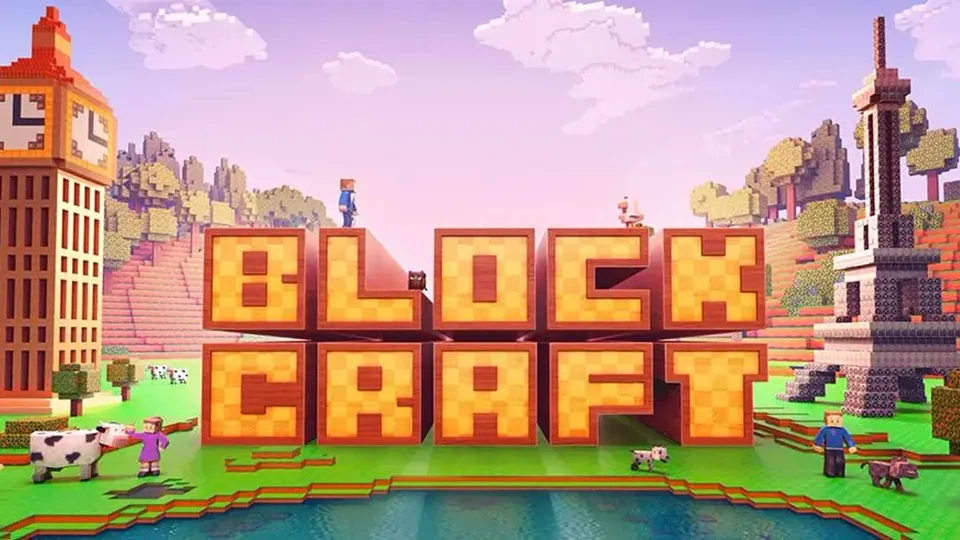
Block Craft is a relaxed city-building block simulator about growing a village, following blueprints, decorating builds, visiting friends, and playing without monster pressure.
Peaceful Village Building
Block Craft is best understood as a Block Craft 3D-style construction game: a relaxed block simulator where the main promise is city growth, not survival pressure. Building and exploring happen without monster pressure, which changes the whole pace. You are not racing the sun, hiding from mobs, or protecting a hunger bar. You are choosing what kind of place your village should become.
The building fantasy is broad on purpose. Houses, castles, mines, spaceships, and landmark-style projects such as the Eiffel Tower all fit the same construction-first identity. Block Craft is about making visible structures, expanding a village, decorating rooms, and turning separate builds into a readable city. It sits near Minecraft-style block games because of the cube-based look, but its design center is closer to a casual construction simulator.
The strongest version of that identity is village growth with a light economy underneath it. Block Craft 3D-style play often uses blueprints or schematics as construction goals, then rewards completed work with currencies such as coins, gems, or XP. Finishing a build can unlock the next idea, support custom blocks or furniture, and give the player a reason to turn one finished structure into a larger district.
That is also why the game has a different kind of satisfaction. A survival game makes progress feel valuable because danger is always nearby. Block Craft makes progress visible because the world changes as you add walls, roofs, paths, pets, furniture, and bigger silhouettes. A small house becomes a street. A street becomes a village. A village becomes a city if you keep connecting buildings with the same design language.
Blueprints, Rooms, and Streets
The core loop is choose, build, inspect, decorate, and expand. Guided blueprints provide a clear construction path and keep early projects from becoming shapeless. Free building works when the idea is already clear: a tower, a castle gate, a mine entrance, a pet area, or a decorative landmark.
Once the structure exists, the second half of the loop is decoration. Furniture, custom blocks, character choice, pets, and selling created items for gems all make the game more specific than a plain block placer. You are not only stacking cubes. You are deciding what each building is for, what belongs inside it, what animal or character energy fits the space, and whether the next creation should support the city or become a showpiece.
Pets are more than a cute side note because they help assign purpose to empty spaces. A dog or cat makes a starter house feel lived in. A larger animal such as an elephant changes how big a yard or plaza should be. If every building is only a box, the village feels like a storage grid. If pets, furniture, fences, gardens, and paths create destinations, the same blocks start to feel like a settlement.
The create-and-sell loop also gives small builds a reason to exist. Custom furniture and custom blocks are useful not only for decoration, but for learning scale and repetition. A chair, lamp, counter, or patterned wall teaches proportion faster than a giant unfinished castle. Selling a creation for gems turns that design practice into progression, so compact polished work can be more productive than oversized shells.
The best early builds are small enough to finish. A compact house teaches scale. A watchtower teaches height. A mine entrance teaches framing. A bridge teaches connection. A castle wall teaches repetition. After you understand the block size, you can make bigger work without producing a flat rectangle that feels unfinished.
Practical building habits help:
Because there are no monsters driving the pace, the challenge becomes self-directed. The game asks whether you can plan, finish, and improve a build without being forced by combat. That makes it good for short sessions: you can complete one room, one roof, one pet corner, or one street segment and still feel progress.
Key Highlights
- Start with the footprint before adding decoration.
- Keep the first roof simple so the house reads from a distance.
- Repeat materials across related buildings to make them feel like one district.
- Use paths to connect structures instead of leaving them scattered.
- Add depth with windows, ledges, fences, and entrances before changing every block type.
- Use pets and furniture to define what a room is for before expanding the shell.
- Treat gems and coins as planning pressure: spend them on blocks or designs that serve the next district.
- Save landmark ideas until you understand the camera, placement, and scale.
Peaceful Builder, Not Survival Clone
Block Craft is a block-building game with clear construction goals and very little pressure. The no-monsters structure is not a minor detail. It changes what counts as smart play. In a survival game, the first questions are shelter, light, food, tools, and defense. In Block Craft, the first questions are footprint, height, roof shape, road placement, interior purpose, and how the next building will fit beside the first one.
That peaceful design keeps resource scarcity away from the center of the loop. Progress comes through readable goals: build a house, complete a blueprint, decorate a room, add pets, visit a friend's city, and return with ideas. The friend-visit angle matters because Block Craft is partly about seeing what other players build and borrowing design logic for your own village.
Friend-city visits should be treated like an architecture walk, not just a social feature. Look for how another village handles main roads, plaza spacing, landmark height, animal areas, and repeated materials. Helping finish another construction can also show how a blueprint is organized from foundation to roof. The useful lesson is the pattern behind the build: where the doorway sits, how the roof breaks the rectangle, how the street gives the building a front.
PvP, enemy waves, survival crafting, redstone-style engineering, and a deep mining economy are not the center of this design. Block Craft is peaceful by structure. Its logic is structure, symmetry, decoration, and a gradually expanding block settlement rather than danger management.
There is also an important expectation point: Block Craft is not about proving technical mastery. It is about finishing visible builds. A simple house with a clean path and matching roof is a better first result than an enormous castle shell with no interior, no gates, and no surrounding city. The game rewards clarity more than ambition.
Build Planning Habits
Before committing to a large project, test movement and block placement with a tiny shape. Place a short wall, add a corner, build a small roofline, then look at it from several angles. A few seconds spent understanding the controls prevents crooked walls and misplaced roofs later.
For the best first session, choose one build that can be completed in a single sitting. A starter house with a door, roof, windows, and a short path is enough. If that feels too basic, add a pet area or a small tower next to it. The goal is to learn the scale of the blocks and the rhythm of placement before trying a city center.
If the version you are playing limits block supply or pushes a guided schematic, do not fight that structure at the start. Use the limit as a design exercise. Build with fewer materials, finish the outline, collect the reward, then come back with better blocks or furniture once the city has earned them. Constraint is only frustrating when every project is too large for the current kit.
When a build looks wrong, do not immediately replace every material. First check the shape. Most weak block builds fail because they are too flat, too square, or too disconnected from the ground. Add a porch, a second roofline, a small path, or a side room. If the silhouette improves, then decoration will matter.
Use the peaceful pacing correctly. Since the game is not chasing you with monsters, you can stop after each structure and look at it from a distance. Ask whether the doorway is readable, whether the roof has shape, whether the path connects to the next building, and whether the village has a clear center. That inspection loop is where Block Craft becomes more than random block placement.
Finally, use other cities as reference instead of treating them as distractions. Visiting friends and helping with construction is a real design advantage. Seeing another layout can teach street spacing, landmark placement, and how repeated materials make a city feel coherent. Copy the principle, not the exact building, then bring it back into your own village.
A good long-term Block Craft village usually has three scales working together. The small scale is furniture, pets, windows, fences, and room purpose. The middle scale is houses, shops, bridges, mines, towers, and yards. The large scale is roads, landmarks, districts, and skyline. When a city feels messy, it is often because only one scale has been developed. Fix the missing scale instead of starting over.