


Beast Clash Online
Beast Clash is a fast 2D animal fighting game where meme-inspired warriors use movement, blocks, combos, special skills, Burst attacks, and local versus controls.
Meme Animals With Real Fighting Rules
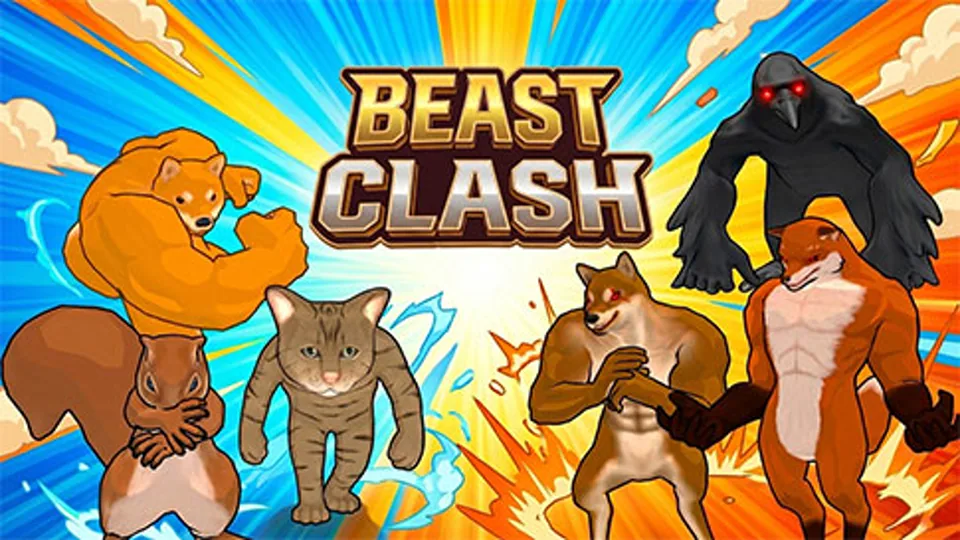
Beast Clash is a fast 2D fighting game built around exaggerated animal warriors and short arena duels. The first impression is intentionally absurd: muscular dogs, clever foxes, magic squirrels, penguins, and other cartoon beasts fight like internet meme champions. Under the joke, though, the structure is a real compact fighter. Pick a beast, control space, block pressure, chain light and heavy attacks, use directional skills, build the Super Gauge, and spend Burst when the rival is actually vulnerable.
The tone sits between cartoon animal comedy and real 2D duel pressure. Beast Clash is not trying to be a giant tournament fighter with encyclopedic command lists. It is a lighter, faster duel game where the basics matter immediately. The funny roster gets attention, but spacing and timing decide the round.
The named animal fighters help define the roster. Walking Cat suggests quick, readable brawling. Crowrilla makes the joke heavier and more physical. Egg Dog turns the absurdity into a recognizable matchup hook. Even when the roster is comedic, each beast should be treated as a matchup problem: what is its best range, how quickly does it recover, which attack starts pressure, and when does Burst become dangerous?
That is why Beast Clash is more than button mashing. A player who only attacks will run into blocks, missed specials, and punish windows. A player who backs up too much gives away the arena. A player who fires Burst the moment the gauge fills may lose the strongest comeback tool. The best rounds look simple from the outside, but they are built from small decisions: step in, test with a light attack, block, dash out, punish the whiff, then spend meter only when the hit is real.
The animal-fighter rules explain why the game feels sharper than the comedy suggests. There is no need to memorize a huge command list first. The core pressure is built around normals, overhead threats, directional skills, dash-cancel pressure, and meter, so stronger players still win by confirming hits and ending unsafe pressure before it gets punished.
Modes and Match Flow
Beast Clash offers several ways to learn the same fundamentals. Story Mode gives a structured path through opponents and helps introduce the roster. Challenge Mode raises the pressure and asks for cleaner execution. Versus Mode supports direct duels against a friend or opponent. Training Mode is where movement, combo routes, skill range, dash timing, and Burst setups can be tested without wasting a real match.
The goal in each fight is direct: reduce the opponent's health before they reduce yours. The depth comes from how every action carries position, timing, and recovery. Light attacks are fast and useful for interruption, checking movement, and starting simple strings. Heavy attacks hit harder but can be punished if they miss. Skill or overhead attacks change the rhythm because they can attack from a different angle or force the defender to react differently. Burst and Super Skill actions are the payoff for meter management.
A good match has momentum swings. One player pressures, the other blocks. One dash changes range. One missed heavy attack creates a punish. One confirmed light attack leads to a stronger follow-up. One Burst turns a losing round into a comeback. Beast Clash works because these moments happen quickly, but they are still readable. You can see why a round was lost: poor spacing, predictable attacks, late blocking, wasted meter, or a failed punish.
Story and Challenge modes are useful for building consistency because they expose bad habits. Repeating the same skill works against a weak opponent, then fails when timing gets stricter. Versus mode exposes habits even faster because another person adapts. Training mode is where those problems should be solved before the next duel.
If the build includes an arcade-style route, use it to learn matchup order rather than only to chase wins. Each opponent teaches a different question: can you approach pressure, stop a jumper, block a heavy animal, or punish a whiff after dash movement? Treat Story or Arcade as a sequence of drills.
Controls, Dashes, and Meter
Player 1 uses A and D to move left or right, W to jump, J for light attack, H for heavy attack, K for skill or overhead attack, and L for Burst or Super Skill. Player 2 uses Left and Right Arrow to move, Up Arrow to jump, 1 for light attack, 2 for heavy attack, 3 for skill or overhead attack, and 0 for Burst or Super Skill.
The same-keyboard layout matters. If one player cannot comfortably reach Burst or movement keys, the match becomes awkward before the fighting begins. The control scheme is simple, but comfort decides whether reactions are fair.
Advanced techniques give the game its staying power. Double-tapping forward or backward creates a dash, useful for closing distance, escaping pressure, or extending offense after a hit. Holding backward blocks attacks, which is essential because constant offense becomes predictable. Skill plus direction combinations can create unique character moves, so one beast may have several useful attack angles. Dash Cancel techniques can keep pressure alive or extend combos after a normal hit.
The Super Gauge is the risk-reward layer. Attacking, pressuring, and surviving long enough can build access to stronger Burst options. A full gauge changes how both players behave. The player holding meter becomes more threatening, but also more tempted to waste it. The defender must respect the comeback threat, but can still bait a bad Burst and punish afterward. The strongest meter use is confirmed: land a starter, catch recovery, punish a whiff, then spend Burst while the opponent cannot freely defend.
The Skill button should not be treated as one generic special. In the Fight of Animals-style system, the skill input can produce a universal overhead and different directional specials, often with different range, angle, and recovery. That makes the same character feel bigger than the small button count suggests. Test neutral skill, back skill, forward skill, and down skill separately, then learn which one starts pressure, which one ends a combo, and which one gets you punished on block.
The Super button also has two identities. It can become an offensive super when you have a real opening, or a defensive burst when you are being hit or pressured. Both spend the bar, so the question is not "can I use it?" but "which use wins the round?" A flashy super that gets blocked is often worse than saving meter to escape the next combo.
Reading the Animal Matchups
Every beast should be studied through range, speed, recovery, and meter payoff. A close-range fighter wants to enter safely and keep pressure active. A mobile fighter wants to make the opponent miss and punish the recovery. A skill-heavy fighter wants to create awkward angles and force hesitation. A heavier fighter may trade better but suffer if attacks whiff.
Start with one fighter long enough to learn its normal reach, jump arc, light attack speed, heavy attack recovery, safest skill, and Burst timing. Swapping characters every round is fun, but it can hide basic problems. Once one beast feels stable, test another character to learn a different lesson. A direct fighter teaches pressure. A nimble fighter teaches spacing. A trickier fighter teaches timing and restraint.
Defense deserves equal attention. Holding backward is not passive; it is how you make an aggressive rival overextend. After blocking a predictable attack, answer with a quick normal, a dash, or a skill if the rival is stuck in recovery. The important rule is to stop pressing when your own string is blocked or missed. Reset spacing and look for a new opening instead of adding one reckless follow-up.
Walking Cat, Crowrilla, Egg Dog, and the rest of the roster are funny first, but they still create role clarity. A close-range beast wants to enter quickly and turn melee into a beatdown. A heavier animal may hit harder but suffer when attacks whiff. A trickier fighter asks you to respect timing before rushing in. The roster may be ridiculous, but the matchup questions are real.
Dash-cancel practice is the bridge between casual and stronger play. A simple hit is useful; a hit converted into dash-cancel pressure or a longer combo changes the round. Start by learning one reliable route from a light starter and one from a heavy starter. Once those are stable, add a Burst or super finish only when the combo position makes it safe.
Beast Clash is a compact fighting game built from funny rosters, local duels, combo practice, special moves, fast rounds, and readable 2D arenas. It is lighter than a traditional fighter, but deeper than random button smashing. Humor opens the door; spacing, defense, dash control, and meter discipline decide who keeps winning.