



2v2 IO Online
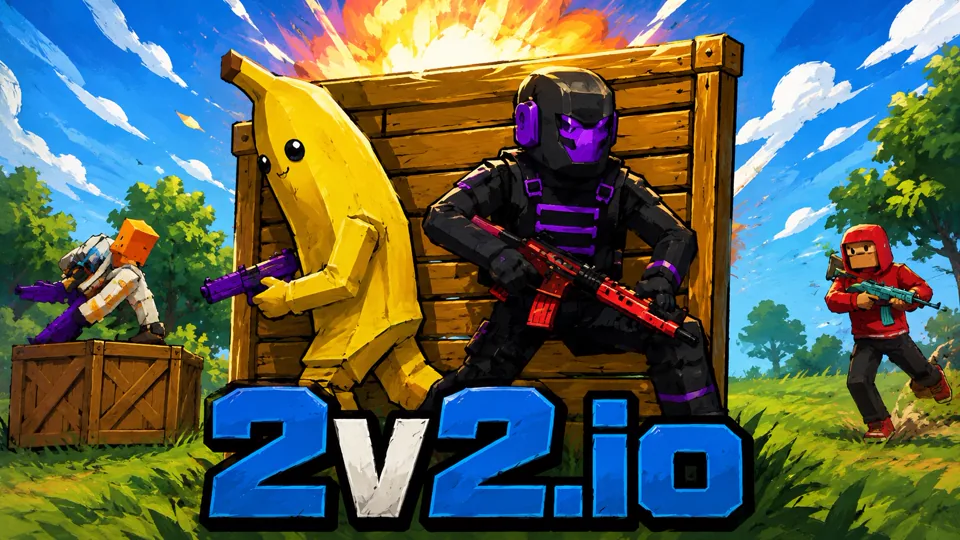
2v2 IO is a fast LEGION GAMES squad battle royale where two-player teams shoot, gather materials, build walls, ramps, and roofs, edit cover, and rotate through a shrinking arena.
A Duo Shooter Where Cover Is a Skill
2v2 IO is a squad battle royale shooter from LEGION GAMES, built around a tight two-player format where building and gunplay share the same fight. Released in February 2026 and updated the following month, it presents itself as a fast-paced building game rather than a long loot grind. Your duo has to gather materials, throw up instant walls, ramps, and roofs, reload under pressure, and outgun rival squads while the arena keeps shrinking. That short loop captures the whole appeal. 2v2 IO is not just a shooting test and not just a construction test. It is a game about making both decisions at the same time.
The match footprint is smaller than a long survival royale. Your duo enters a 3D arena, gathers materials such as wood and metal, fights other squads, and keeps moving as the safe zone shrinks. Structures appear instantly enough that building becomes part of the firefight instead of a separate planning phase. A wall can save a reload. A ramp can turn low ground into a stronger angle. A roof can block pressure from above. An edit can reopen a fight when a defensive piece has done its job.
That format creates a clear demand: each teammate must help the other stay alive. If both players chase the same target without cover, a rival duo can punish the angle. If both players hide and only build, they burn materials and give up pressure. Strong 2v2 IO play sits between those extremes. One player can pressure while the other reloads. One can build a wall while the other takes a shot. One can rotate first while the other covers the move. The game is called 2v2 for a reason; the squad is the unit that wins.
Controls That Shape the Fight
The common control layout is direct. Move with WASD or the arrow keys. Shoot with the left mouse button. Aim with the right mouse button. Reload with R. Jump with Space. Use number keys 1-0 for slots. Build with ZXCV, edit structures with G, chat with Enter, use B for emotes, and check the leaderboard with Tab. These bindings matter because every key represents a different combat answer.
The build keys are the heart of the duel. A wall is the emergency answer: it blocks shots, protects a reload, stops an exposed peek, or gives a teammate a moment to reset aim. A ramp is the angle answer: it creates high ground, changes sightlines, and lets a player attack from a position that forces the opponent to aim upward. A roof is the denial answer: it can block pressure, cap a space, or prevent an enemy from using height freely. Edit is the correction answer: it changes a structure that is no longer serving the fight.
The important lesson is that building should be small and purposeful. New players often overbuild because placing structures feels active. But every unnecessary piece costs time, materials, and attention. A complicated tower can split the duo or make both players reload in awkward spots. A single wall placed at the right second is often stronger than a messy stack of ramps. Build what changes the next two seconds, then return to shooting or rotating.
Shooting still decides matches. Structures buy time, shape angles, and protect movement, but they do not eliminate opponents by themselves. If you gain high ground and never take a shot, the ramp was wasted. If you wall off danger and forget to reload, the cover only delayed the same problem. The best rhythm is simple: take space, build when threatened, reload safely, peek together, and move before the zone turns a good position into a liability.
Slots matter because weapon access is part of timing. A player who fumbles between weapons after building has already lost the advantage the structure created. Keep the most important weapon on a familiar number, reload before a push, and avoid opening chat while exposed. Emotes and leaderboard checks belong between fights, not while the duo is rotating or being pressured. Small interface habits become combat habits once the match accelerates.
Materials, Zone Pressure, and Duo Roles
Material collection is the quiet part of 2v2 IO. Wood and metal are not glamorous, but they decide how many defensive answers your duo has when the fight gets messy. Entering a duel with no materials turns every reload into a risk. Entering with enough resources lets the squad survive bad timing and convert it into a second chance. The early match should not be a blind sprint into combat. Gather enough materials, locate the next safe movement path, then choose a fight where the duo can support each other.
The shrinking safe zone forces decisions. A perfect build fight is worthless if the arena closes behind you. Zone pressure also changes which structures matter. In open space, walls and ramps help cross dangerous sightlines. Near the end of a match, small pieces that protect a short rotation can matter more than high towers. When the zone moves, the team that rotates first often gets to aim at the team that delayed too long.
Duo roles should stay flexible rather than fixed. Sometimes the better aimer leads the attack while the partner protects reloads and builds. Sometimes the builder takes first contact because they can create safe space faster. Sometimes both players need to rotate without fighting. The wrong habit is assigning one player to "always build" and the other to "always shoot." 2v2 IO punishes rigid roles because the fight changes too quickly. The better rule is shared responsibility: both players know the build keys, both players can shoot, and both players understand when to stop dueling and move.
Communication should be short. A duo does not need long speeches during a build fight. It needs clear calls: low material, reloading, rotate left, one enemy split, pushing ramp, edit now, leave zone. Enter chat can help with coordination, but voice-like discipline still applies even when using text. The useful call is the one that changes the next action. Anything longer steals aim time.
Useful habits for early wins:
Key Highlights
- Collect materials before starting a long exchange.
- Stay close enough that a teammate's wall or shot can actually help.
- Use one wall to reload rather than building a nervous maze.
- Take high ground with ramps only when the partner can follow or cover.
- Edit structures after they protect you; do not stare at your own cover forever.
- Rotate before the safe zone forces a desperate sprint.
- Keep weapon slots consistent so building does not break your shooting rhythm.
- Shoot from the angle your build creates, then reset before opponents counter it.
The Difference Between Fast and Sloppy
2v2 IO looks frantic because building and shooting happen together, but the best play is not random speed. It is controlled speed. Fast players who build without purpose run out of resources. Fast players who shoot without cover lose reload timing. Fast players who chase without their teammate turn a squad game into two separate duels.
Controlled speed means every action has a reason. A wall should stop a shot or cover a reload. A ramp should create a better angle or cross danger. A roof should deny pressure. An edit should open a useful line, not simply show that the key exists. A rotation should happen before the zone damages the team's options. Even aim improves when the build choices are cleaner, because the player spends less time panicking in the open.
For the first few matches, keep the plan intentionally narrow. Learn movement, reload, jump, and the three build keys before trying flashy edits. Stay near the teammate. Gather enough material to survive a first contact. When shots begin, place one useful piece and return fire from behind it. If the fight drifts away from the safe zone, leave early. Winning a weak fight outside the zone often loses the match anyway.
As the controls settle, start reading enemy behavior. Opponents who overbuild can be rotated around. Opponents who never build can be pressured during reloads. Opponents who split can be collapsed on as a duo. 2v2 IO is best when both players see the same fight: where the zone is moving, which enemy has cover, which teammate needs help, and which structure changes the next shot. Outbuilding and outgunning are not separate goals. The winning squad does both in one rhythm.
A good improvement path is to practice one layer at a time. First, survive with one wall and a clean reload. Then add a ramp only when it gives an actual shooting angle. Then practice edits that reopen a fight without exposing both teammates. Finally, work on rotations before the zone demands them. Fast play comes from simple habits becoming automatic, not from pressing every key at once.